
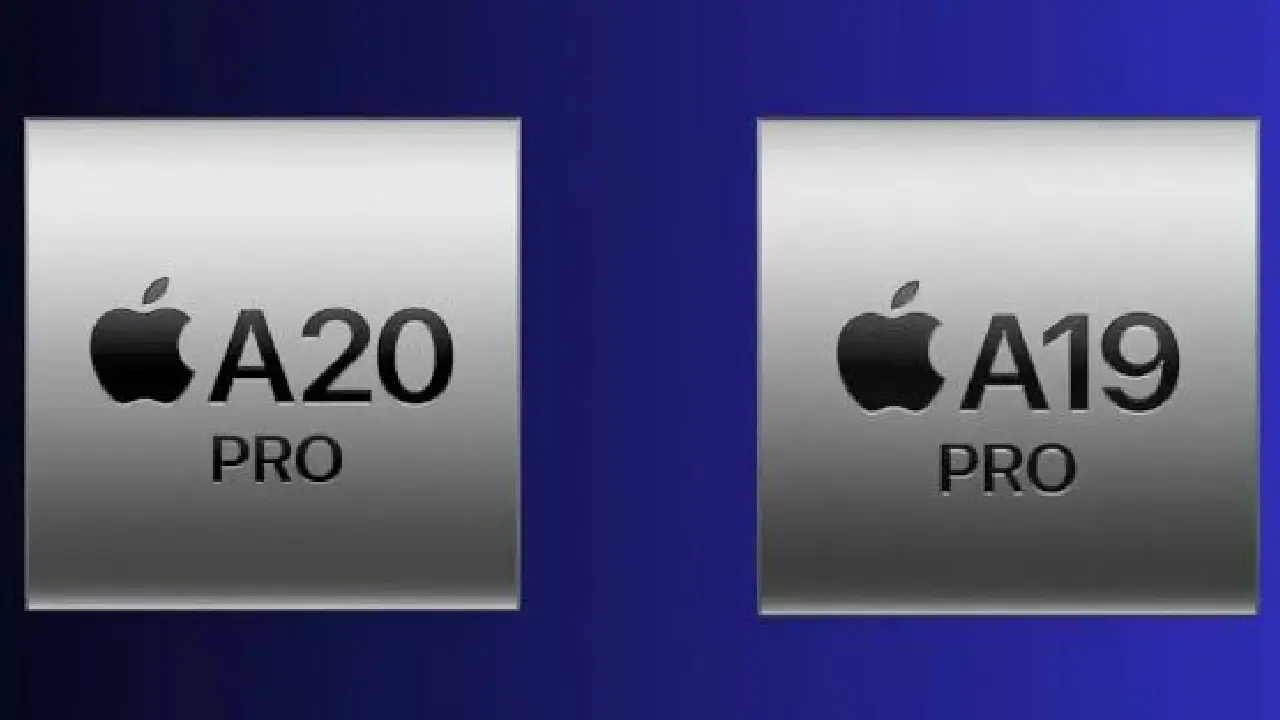
A20 Pro adds a seventh GPU core and a Dual 16-core Neural Engine, while keeping a six-core CPU configuration. The A19 Pro used in the iPhone 17 Pro models has a six-core GPU and a 16-core Neural Engine. These are meaningful specification changes, but they do not tell us how much faster your particular app will run. Sources: Apple’s A20 Pro specifications and Apple’s A19 Pro announcement.
This A20 Pro vs A19 Pro comparison separates published hardware details, Apple’s performance claims and the evidence you should seek before upgrading. It focuses on the Pro iPhones; do not assume every product carrying a related chip name has the same configuration.
Research checked September 18, 2026. This AI-assisted analysis uses Apple’s product specifications and announcements. We have not benchmarked either chip. No independently verified head-to-head scores are included here. Recommendations are editorial analysis, and manufacturer performance claims are identified as such.
A20 Pro vs A19 Pro: published specifications
| Feature | A20 Pro | A19 Pro |
|---|---|---|
| CPU | 6 cores | 6 cores |
| GPU | 7 cores | 6 cores |
| GPU Neural Accelerators | Listed | Listed |
| Neural Engine | Dual 16-core | 16-core |
| Hardware-accelerated ray tracing | Listed | Listed |
Sources: iPhone 18 Pro technical specifications and iPhone 17 Pro launch announcement. Core counts describe configuration, not a measured speed difference.
What Apple says about performance
On its iPhone 18 Pro page, Apple claims graphics performance up to 40% faster than iPhone 17 Pro. It also describes up to 40% better sustained performance, attributing this to the chip design, revised cooling and materials working together. These are manufacturer comparisons of phone systems, not proof of a 40% gain in every application. Source: Apple’s performance section.
Apple also describes a Neural Engine compute increase and improved memory bandwidth. Those are different measurements from app response time. Neither a percentage gain nor a larger core count should be converted directly into a claim that all games, exports or AI tasks run proportionally faster.
Keep the comparison baseline in view. Apple’s 2025 A19 Pro announcement also used a 40% sustained-performance claim, but compared that generation with its predecessor. It is a separate claim, not an A20-versus-A19 result. Read the original A19 Pro comparison.
CPU: the same number of cores does not mean the same speed
The six-core label alone cannot settle this comparison. For a buyer, a more useful question is whether the newer phone completes a task that regularly keeps you waiting.
Think of three things you do often: opening a work document, editing a photo or exporting a clip, for example. Look for tests of those activities. If your current phone already performs them comfortably, a processor upgrade has less practical value than it would for someone whose work is repeatedly interrupted by delays.
We are not assigning a CPU speed percentage from the core counts. That would require measured results or a clearly specified manufacturer comparison with the correct baseline.
GPU: compare the game and settings you actually use
The GPU change makes gaming a relevant area to investigate, but a launch specification is only the starting point. Ask whether a test uses the same game version, resolution, visual settings and frame-rate limit on both devices.
Watch for what happens after the opening minutes. A useful review reports frame stability over a longer session, rather than showing only a brief peak. It should also explain the room conditions and whether the phones were charging. Otherwise, apparently different outcomes may reflect different test conditions.
For a casual player, the decisive question may simply be whether the preferred game runs smoothly enough on the existing phone. For a competitive player, consistent delivery of frames can deserve more attention than the highest number briefly reached.
AI hardware: A19 Pro already had Neural Accelerators
Neural Accelerators are not an entirely new arrival with A20 Pro. Apple explicitly described them inside A19 Pro’s GPU cores. The new configuration should therefore be discussed as a development of existing AI hardware, rather than the first chip in this comparison capable of AI work. Apple’s A19 Pro hardware explanation.
Before paying for an AI-related upgrade, name the feature you want and check its device, language and regional requirements. Then look for a demonstration of that feature on both phones. Extra compute does not, by itself, establish feature availability or guarantee that a specific service processes everything locally.
Video editing: measure useful time saved
If you make videos, compare a project similar to your own. The source footage, effects, app version and output format should match. Check whether the reported time covers only export or also includes importing, generating previews and transferring the finished file.
Here is a hypothetical decision example, not a benchmark: reducing a ten-minute export to eight minutes saves two minutes. Once a month, that may be unimportant. Several times a day, it could matter. Use your workload and the full upgrade cost to decide what that time is worth.
Camera hardware is a separate consideration. Our iPhone Duo vs iPhone 18 Pro Max comparison explains why a phone decision needs more than a chip name.
What a credible benchmark comparison should show
- The exact phone models, operating-system builds and benchmark version.
- Repeated runs, with the range of results rather than only the best score.
- Battery state, charging status and relevant temperature conditions.
- A clear distinction between short tests and sustained workloads.
- Real tasks alongside synthetic scores, with enough detail to repeat them.
This article does not include Geekbench or other numerical scores because no verified head-to-head dataset is presented here. That does not mean no results exist; it means we are not using unverified numbers to make the buying recommendation.
Should an A19 Pro owner upgrade?
Our recommendation is to keep an iPhone 17 Pro that meets your needs unless you can identify a specific limitation that the newer phone demonstrably improves. A20 Pro’s published changes give demanding users reasons to investigate, but a specification advantage alone is not a requirement to replace a working device.
If you are choosing between two purchases, compare the actual prices, condition, warranty and expected workload. If you already own the older model, calculate the net upgrade cost after a realistic resale or trade-in offer. Make the decision around a problem solved or useful time saved, then consider the other phone features that matter to you.