
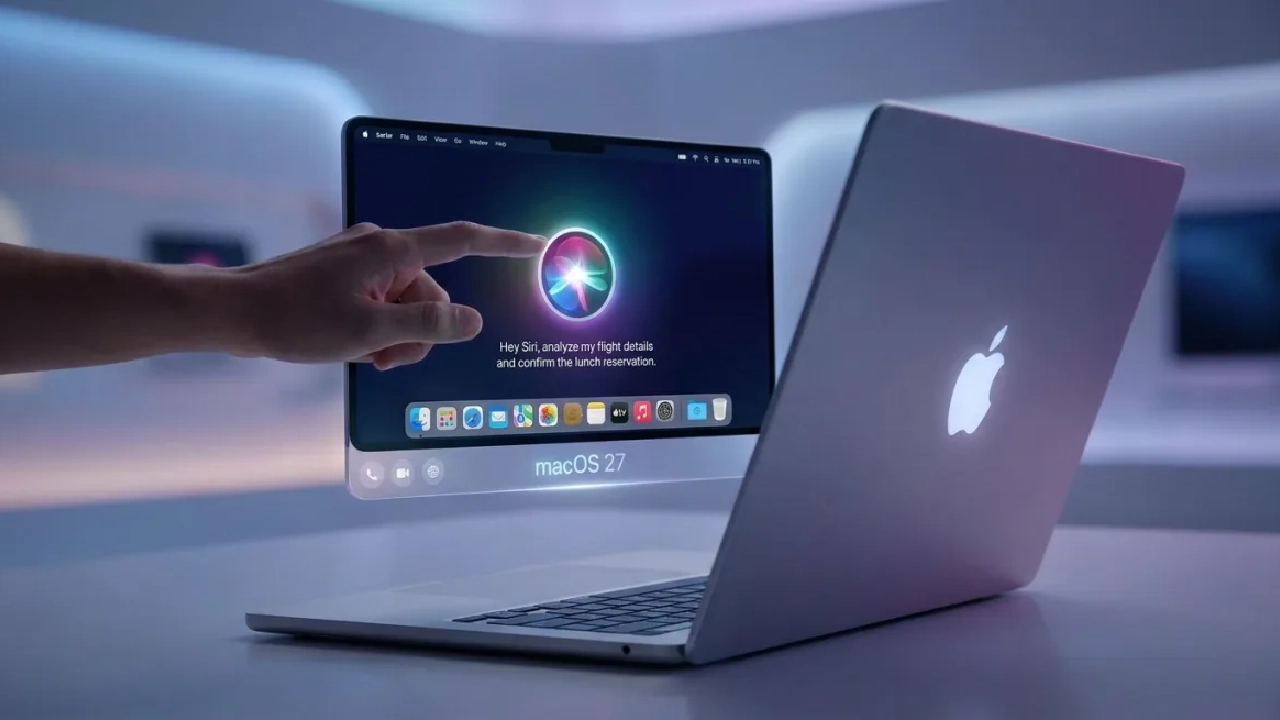
Apple is reportedly preparing a “polishing” update for macOS 27, set to debut at WWDC on June 8. Following the uneven rollout of the Tahoe interface, this release focuses on refining the controversial Liquid Glass design language — improving contrast, sidebar readability, and system efficiency. The crown jewel? A Gemini-powered Siri overhaul that brings a dedicated chatbot-style assistant app to your Mac.
I’ve been following macOS since the early Aqua interface and the infamous “brushed metal” era. And if there’s one thing Apple’s history has taught us, it’s this:
The first version of a major redesign is rarely the final form.
According to the latest reporting from Bloomberg’s Mark Gurman, Apple may be preparing to repeat that cycle once again.
After the mixed reception surrounding the Tahoe interface, macOS 27 increasingly looks like the “correction” release many Mac users were hoping for.
Cleaning Up the Rough Edges of Liquid Glass
Let’s be honest: Tahoe often felt unfinished.
While the Liquid Glass design language was visually ambitious, many users struggled with weak contrast, excessive transparency, and blurry sidebars that sometimes made readability frustrating — especially in Dark Mode.
From what’s being reported, Gurman says the upcoming changes represent how Apple’s design team originally intended Liquid Glass to look — the issues were the result of a “not-completely-baked implementation” from the software engineering side. Rather than a dramatic redesign, macOS 27 appears to be a refinement-focused update featuring:
- Better shadow depth and layering
- Improved contrast across system apps
- Reduced transparency in sidebars and menus
- Cleaner visual separation between windows
- Better accessibility and readability overall
If you disliked Liquid Glass from day one, this update probably won’t completely change your mind. But if your biggest complaint was that the interface felt unfinished or inconsistent, macOS 27 may address many of those concerns directly.
Worth noting: iOS 26.1 already introduced an option to “frost” the interface for more opacity and contrast — macOS 27 appears to take that approach further system-wide.
The Return of Apple’s “Under-the-Hood” Philosophy
One of my favorite Apple eras was the Snow Leopard and iOS 12 generation — periods where the company temporarily stopped chasing flashy features and focused instead on stability, efficiency, and reliability.
macOS 27 reportedly follows that same philosophy.
According to Gurman, “code cleanup” has become a major internal focus this year, with Apple targeting bug fixes, battery-life upgrades, and performance improvements alongside the design refinements.
For professionals who rely on Macs daily, improvements to battery life, thermals, memory management, and responsiveness are often more valuable than cosmetic changes. It’s refreshing to see Apple prioritize the “Pro” side of the MacBook Pro again — focusing on the underlying experience instead of purely visual experimentation.
Siri’s Biggest AI Upgrade Yet — Powered by Gemini (and Possibly More)
The real centerpiece of WWDC on June 8, however, will likely be Apple’s next AI push.
Across both iOS 27 and macOS 27, Siri is reportedly receiving a dedicated app with a chatbot-style interface — something Apple users have been expecting for years. Think conversation history, follow-up questions, and a proper iMessage-style chat interface for interacting with your assistant.
The most interesting part? Apple is using Google Gemini models as the backbone for the new Apple Foundation Models powering this Siri experience — a partnership confirmed by Google Cloud chief Thomas Kurian at Google Cloud Next 2026.
But it doesn’t stop at Gemini. Reports suggest Apple may let users choose which AI model powers their features — with Anthropic’s Claude and OpenAI’s ChatGPT reportedly also in testing alongside Gemini. This is a major shift: your Mac’s assistant could be powered by whichever AI you trust most.
If true, this could finally move Siri beyond the frustrating “Here’s what I found on the web” experience and toward something that genuinely understands context, follow-up requests, and workflow intent — deeply integrated into macOS itself.
For power users, that may end up being the most important announcement of the year.
Looking Ahead to WWDC on June 8
As WWDC approaches, Apple’s strategy is becoming increasingly clear.
This year does not appear to be about reinventing macOS. It’s about refining the platform Apple introduced last year and fixing the pain points users immediately noticed.
For everyday users, that could translate into:
- Better battery life
- Cooler system temperatures
- Improved stability and fewer bugs
- Cleaner readability in all lighting conditions
- Faster, more useful AI integration via a new Siri app
After more than two decades of covering Apple keynotes, I’ve learned that these “polishing” releases often age better than the flashy redesign years. The features you use every day — search, reading text on screen, battery life — matter far more in the long run than a new icon set.
And honestly, those are usually the updates Mac users end up appreciating the most.
Frequently Asked Questions
When is macOS 27 expected to launch?
Apple is expected to officially unveil macOS 27 during WWDC on June 8, with developer betas likely becoming available immediately afterward. The public release in the USA will probably arrive in September, following Apple’s typical release cycle.
Will my current Mac support macOS 27?
Apple has not officially confirmed compatibility yet. However, the heavy focus on AI and efficiency strongly suggests Apple Silicon Macs — including M1, M2, M3, and M4 systems — will receive the best overall experience, especially for advanced Siri and AI-powered features.
Is Apple removing the Liquid Glass interface?
No. Based on current reports, Apple is not abandoning Liquid Glass. macOS 27 appears focused on refining the design language by improving readability, contrast, accessibility, and transparency handling. Think of it less as a replacement and more as “Liquid Glass 2.0.”
Which AI model will power the new Siri on macOS 27?
Google Gemini is confirmed as the primary AI backbone for Apple’s new Foundation Models powering Siri. However, reports suggest Apple is also testing support for Anthropic’s Claude and OpenAI’s ChatGPT, potentially allowing users to choose their preferred AI model.
What is the Snow Leopard comparison about?
Mac OS X Snow Leopard (2009) was famous for being a “no new features” release — Apple focused entirely on speed, stability, and reliability instead of adding new functionality. Many Apple users consider it one of the best macOS releases ever. macOS 27 is drawing that same comparison because of its emphasis on performance, bug fixes, and refinement over flashy new additions.
Will the new Siri replace Spotlight Search on Mac?
Not exactly. Reports indicate Siri is getting a new dedicated app with a chatbot-style interface, while Spotlight remains a separate tool. The two may feel more connected through deeper AI integration, but a full merger has not been confirmed.