
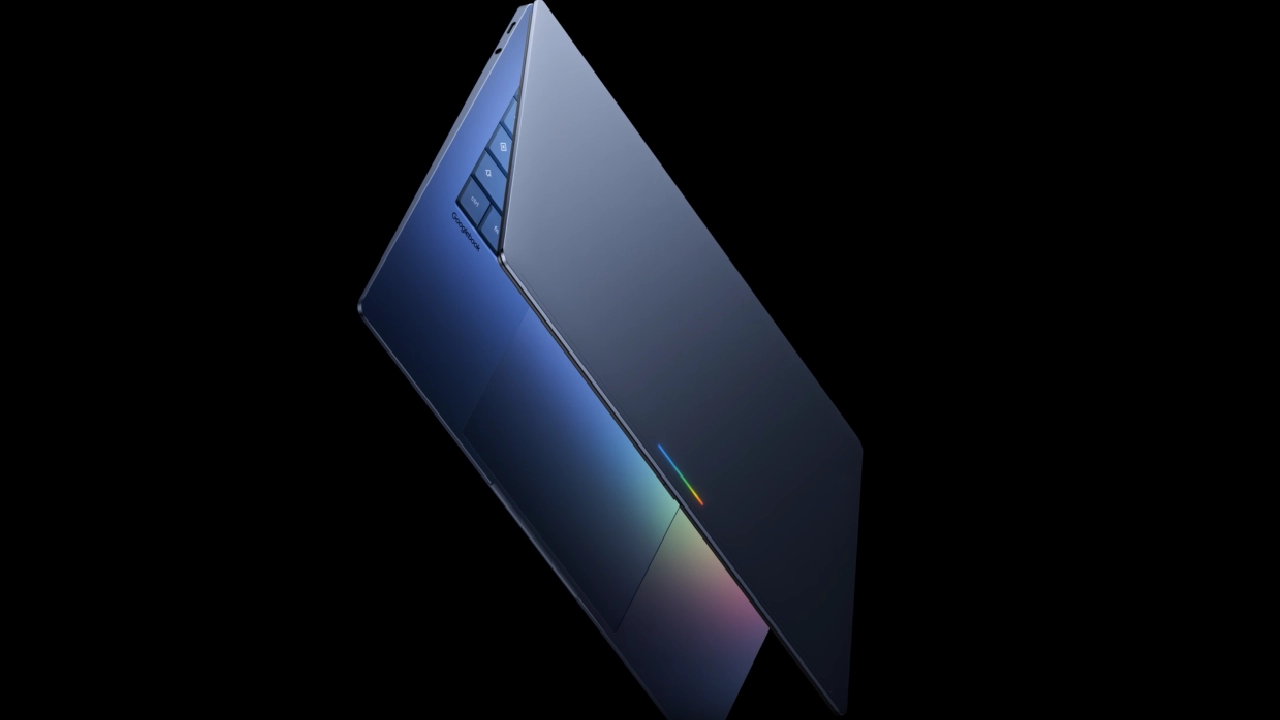
Google appears to be preparing a major evolution beyond the Chromebook era with a new category of AI-focused laptops reportedly called the “Googlebook.”
Expected to arrive in late 2026 through partners including Dell and HP, these devices are said to combine the Android technology stack with the ChromeOS browser experience into what Google internally describes as an “Intelligence System.”
The headline features reportedly include:
- an AI-powered “Magic Pointer,”
- dynamically generated desktop widgets,
- deeper Android integration,
- and a signature “Glowbar” hardware design intended to visually distinguish premium AI-certified devices.
I still remember when Google launched the first Chromebook more than 15 years ago.
At the time, the idea of a cloud-first laptop sounded borderline ridiculous to many tech journalists. The concept of relying almost entirely on web apps — without traditional local software or massive onboard storage — felt wildly impractical.
Fast forward to today, and cloud computing has quietly become the default experience for millions of people.
Now Google appears ready to disrupt the laptop model once again.
After spending two decades covering operating system launches, I can confidently say this doesn’t feel like a simple Chromebook rebrand. If the early demonstrations are accurate, Googlebook represents a much larger attempt to redefine what personal computing looks like in the Gemini AI era.
From “Operating System” to “Intelligence System”
For decades, laptops have essentially functioned as digital filing cabinets: you open apps, organize files, search folders, and manually tell the machine what to do.
Google’s vision for Googlebook appears fundamentally different.
By combining Android’s underlying architecture with ChromeOS’s lightweight browser-centric approach, the company is reportedly building what it calls an “Intelligence System” — software designed to anticipate tasks rather than simply react to commands.
That sounds like typical marketing language on paper.
But two demonstrations genuinely stood out to me.
1. The “Magic Pointer” Makes the Cursor Feel Relevant Again
Let’s be honest: the traditional mouse cursor has barely evolved since the 1990s.
You move it.
You click.
You right-click.
That’s essentially been the experience for decades.
Google’s new AI-powered “Magic Pointer,” reportedly developed alongside the DeepMind team, attempts to transform the cursor into a context-aware assistant.
In Google’s demo, lightly shaking the cursor activates Gemini.
From there, the system can interpret what’s currently on-screen and proactively offer actions.
For example:
- Hover over flight details in an email, and Gemini may suggest creating a calendar event.
- Point at multiple products while shopping online, and the system can compare or visualize them together.
- Highlight scheduling details, and contextual AI suggestions appear automatically.
What impressed me most is that it feels less like typing prompts into a chatbot and more like AI blending naturally into the desktop experience itself.
That’s a much smarter direction for personal computing.
2. AI-Generated Widgets Could Make Desktops Useful Again
Desktop widgets have existed for years, but most users abandoned them because they either became too cluttered or weren’t flexible enough to justify the screen space.
Googlebook’s “Create Your Widget” system looks significantly more dynamic.
Instead of manually configuring dashboards, users can reportedly describe what they need conversationally.
“Build me a dashboard for my Berlin trip.”
The system can then automatically generate:
- countdown timers,
- flight details pulled from Gmail,
- restaurant reservations,
- weather updates,
- navigation shortcuts,
- and calendar events in a single workspace.
For the first time in years, the desktop itself starts to feel genuinely contextual and personalized rather than static.
Finally, a Laptop That Actually Understands Your Phone
As someone who primarily uses Android devices, Apple’s ecosystem integration has always been one of the company’s biggest competitive advantages.
Googlebook appears designed specifically to close that gap.
Because these devices reportedly share Android’s core technology stack, app integration should feel far more native than current Chromebook implementations.
Instead of relying on awkward screen mirroring, users may be able to:
- launch Android apps directly on the laptop,
- sync notifications instantly,
- access phone files seamlessly,
- and move between devices with almost no friction.
The feature that personally stands out to me most is Quick Access.
Being able to search files stored on a Pixel phone directly from the laptop’s file manager — without manually transferring or sharing them first — solves a surprisingly frustrating workflow problem that Android users have dealt with for years.
Hardware Designed to Feel Premium
Google also appears serious about changing the perception of ChromeOS hardware.
According to reports, partners including Acer, ASUS, Dell, HP, and Lenovo are all expected to produce Googlebook hardware.
The most distinctive design element so far is the reported “Glowbar” — a built-in lighting strip that acts as both a visual status indicator and an AI-branding element.
It may sound cosmetic, but strategically it matters.
For years, Chromebooks have largely been associated with classrooms and budget hardware. Googlebook appears positioned as something very different: a premium AI-first laptop platform intended to compete more directly with devices like the MacBook Pro.
My Take: Could Googlebook Actually Work?
We still need to see real-world products before drawing final conclusions.
But conceptually, Googlebook feels like the logical next step in a world increasingly shaped by AI assistants, cloud computing, and mobile-first workflows.
If Google can genuinely deliver a laptop experience that proactively helps users instead of constantly waiting for manual commands, the traditional operating system model could begin to feel surprisingly outdated.
And if that happens, the Chromebook era may eventually be remembered as merely the first draft of a much larger idea.
Quick Reader FAQ
Is my current Chromebook becoming a Googlebook?
Not exactly.
Google will likely bring some Gemini-powered features to existing ChromeOS devices, but the “Googlebook” branding appears reserved for newer premium systems built around the unified Android and ChromeOS architecture.
When will Googlebook laptops launch in the USA?
Google is expected to share additional details later this year, with the first partner devices from companies like Dell and HP reportedly arriving in the US market in late 2026.
Will Googlebook run Android apps?
Yes — and much more natively than current Chromebooks.
Because the platform reportedly shares Android’s underlying technology stack, apps should launch faster, integrate more deeply with phones, and share data more fluidly across devices.