
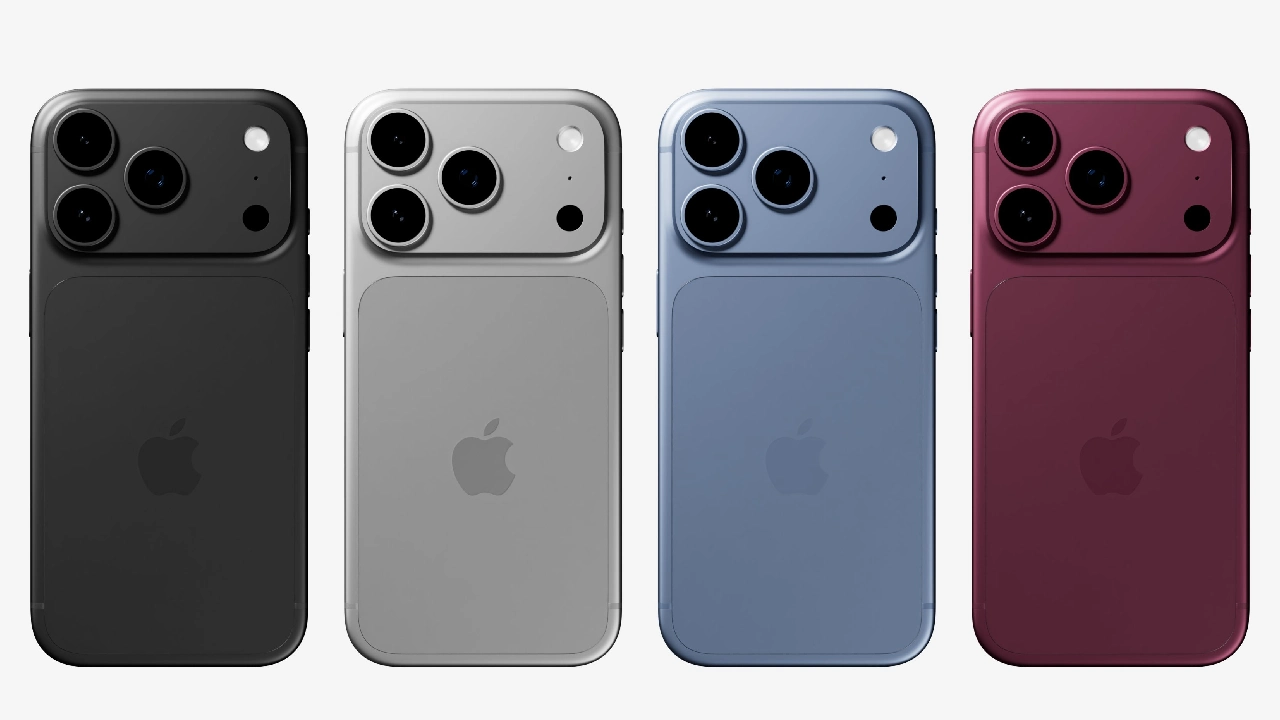
Apple is preparing a major September 2026 upgrade with the iPhone 18 Pro and Pro Max. Key upgrades include a 2nm A20 Pro chip, a Dynamic Island that could shrink by up to 35%, a DSLR-style variable aperture camera, the largest iPhone battery ever (up to 5,200 mAh), Apple’s in-house C2 modem with full satellite internet support via Amazon’s network, and a bold new Deep Red “Dark Cherry” color. Pricing is expected to hold steady at $1,099 (Pro) and $1,199 (Pro Max).
I’ve spent the last 20 years watching the “September iPhone Dance.” For two decades, four phones every fall — like clockwork. But if the latest reports from Bloomberg’s Mark Gurman, analyst Ming-Chi Kuo, and multiple supply chain sources are accurate, Apple is about to break its own rules.
We’re only a few months from the iPhone 18 Pro launch, and for the first time in a long time, the leaks aren’t just about a faster chip or a new shade of titanium. We’re looking at meaningful shifts in how Apple sells iPhones, how long they last on a charge, and how they take photos.
Here’s everything we know, with the hype separated from verified reporting.
Apple’s New Two-Phase Release Strategy: The End of the “September Four”
The most significant structural change in the 2026 iPhone lineup isn’t a feature — it’s a calendar shift.
Apple is reportedly splitting its annual launch into two phases. MacRumors and Bloomberg both confirm that the September 2026 event will feature only the premium models:
- iPhone 18 Pro
- iPhone 18 Pro Max
- Apple’s first foldable iPhone (rumored to be called either “iPhone Fold” or “iPhone Ultra” — Apple has not confirmed the name)
The standard iPhone 18 and budget-friendly iPhone 18e won’t arrive until spring 2027. That means every iPhone available in fall 2026 will carry a price tag of $999 or more — a significant shift for US buyers used to the standard annual upgrade cycle.
The working theory is that the complexity of manufacturing Apple’s first foldable phone forced a calendar reshuffle, and Apple used that opportunity to give its premium hardware the full holiday spotlight.
Battery Life: Finally, an iPhone That Doesn’t Quit
If there’s one area where the iPhone 18 Pro Max could genuinely impress, it’s battery. Leaks from multiple sources — including Weibo tipsters corroborated by Bloomberg — point to a capacity of 5,100–5,200 mAh, the largest ever fitted into an iPhone.
Worth noting: the exact capacity may vary by model configuration. Reports suggest the Pro Max could reach 5,200 mAh in eSIM-only configurations, while physical SIM card models may come in closer to 5,000 mAh. Either way, it’s a substantial jump from the iPhone 17 Pro Max.
Combined with the new A20 Pro chip’s 30% efficiency improvement and LTPO+ display technology that more intelligently manages refresh rates based on your environment, the iPhone 18 Pro Max could realistically deliver the first true two-day battery life in iPhone history for moderate users.
The trade-off: the phone may get slightly thicker — reportedly around 8.8mm, up from 8.75mm on the 17 Pro Max — and heavier. For most people, that’s a trade worth making.
The 2nm A20 Pro Chip: The Real Story Under the Hood
Apple’s A20 Pro chip, built exclusively on TSMC’s new 2nm fabrication process, is expected to debut inside the iPhone 18 Pro models. Early estimates suggest:
- ~15% faster CPU performance vs. the A19 Pro
- ~30% better power efficiency
- Significantly improved on-device AI and Apple Intelligence processing
- Advanced wafer-level packaging (WLMCM) that places RAM alongside the processor on the same wafer for faster data throughput
Apple analyst Ming-Chi Kuo expects the iPhone 18 Pro to ship with 12GB of RAM across the lineup, up from previous generations — a quiet but important upgrade for multitasking and AI features.
Importantly, Kuo does not expect Apple to raise prices to absorb the added memory costs, with the Pro and Pro Max expected to hold at $1,099 and $1,199 respectively.
The Dynamic Island Is Shrinking — But It’s Not Going Away
Months of conflicting rumors have finally converged on a clearer answer. Multiple reliable sources — including Mark Gurman, Bloomberg, leaker ShrimpApplePro, and Weibo’s Instant Digital — all agree: the Dynamic Island will not be removed, but it will get significantly smaller.
The mechanism making this possible is under-display Face ID. By moving Face ID sensors beneath the screen, Apple can reduce the Dynamic Island’s width by an estimated 25–35% — from roughly 20.7mm down to approximately 13.5mm — while retaining the same software experience users already know.
Some earlier leaks mentioned a full punch-hole camera or corner-mounted cutout, but as of May 2026 the consensus among the most credible sources is a slimmed-down Dynamic Island rather than a complete removal.
The practical benefit: more screen real estate, less distraction during media playback, and a cleaner overall look without abandoning a feature Apple has built software around for three generations.
DSLR-Style Variable Aperture: The Camera Upgrade Mobile Photographers Have Waited For
If you care about mobile photography, this is the rumor to watch. The iPhone 18 Pro is widely expected to introduce a variable aperture system on its main 48MP camera — a first for iPhone.
Unlike every iPhone before it, which uses a fixed aperture (typically ƒ/1.78), a variable aperture lens physically adjusts how much light enters the sensor, similar to how a DSLR or mirrorless camera works:
- Bright daylight: Narrow the aperture for sharper backgrounds and more detail throughout the frame
- Low-light scenes: Open wide to capture maximum light, reducing noise
- Portrait shots: Fine control over depth-of-field and background blur
Reports also point to a new Samsung-made three-layer stacked sensor (replacing Sony as the primary supplier), improved telephoto aperture, and upgraded 24MP front cameras on all Pro models. Combined with A20 Pro’s AI processing improvements, this could be the most meaningful camera hardware leap since the 48MP upgrade.
Given Apple’s track record with computational photography, expect most of this to work automatically — but a manual aperture control in the Pro camera app would be a dream addition for serious shooters.
Apple’s C2 Modem and Satellite Internet: Beyond Emergency SOS
The iPhone 18 Pro is expected to debut Apple’s second-generation in-house C2 modem, replacing the Qualcomm chips Apple has depended on for years. The C2 is rumored to support:
- mmWave 5G (critical for dense US cities like New York and Chicago)
- Full satellite-based internet via NR-NTN (New Radio Non-Terrestrial Networks)
- Better signal stability and power efficiency than its predecessor
The satellite story gets more interesting when you factor in a recent corporate deal. Amazon has acquired Globalstar — the company that previously powered Apple’s Emergency SOS satellite feature — in a deal valued at approximately $11.57 billion expected to close in 2027. Apple has already signed a new satellite agreement with Amazon as part of this transition, meaning iPhone satellite connectivity will effectively fall under Amazon’s LEO satellite network going forward.
Apple Maps via satellite, Photos sharing over satellite, and a satellite API for third-party apps are among the confirmed features in development. For rural users and outdoor enthusiasts in the US, this could be genuinely transformative — real internet access, not just emergency messaging, in places with zero cell coverage.
Design: Familiar, With One Stunning New Color
Don’t expect a dramatic redesign. The iPhone 18 Pro is widely expected to maintain the titanium frame and triple-lens camera plateau layout introduced with the 17 Pro. Display sizes remain unchanged: 6.3-inch for the Pro, 6.9-inch for the Pro Max.
One subtle design change worth noting: reports suggest Apple may minimize the visible contrast between the back glass and titanium frame, creating a more unified, seamless premium look.
The headline color story: Bloomberg’s Gurman reports Apple is testing a Dark Cherry finish — a deep, moody burgundy-red unlike anything previously offered on a Pro model. Apple removed black from the Pro lineup entirely with the iPhone 17 Pro, and the 18 Pro appears to continue that direction. Other rumored options include Light Blue, Dark Gray, and Silver.
What Should You Do? Who Should Upgrade?
Here’s my honest take after two decades of covering iPhone launches:
- iPhone 15 Pro or older? The combination of variable aperture, a dramatically better battery, the A20 Pro chip, and satellite internet makes this a compelling upgrade year. Pull the trigger.
- iPhone 16 Pro? The Dynamic Island shrink, camera hardware, and battery jump on the Max are meaningful — worth considering, especially if battery life frustrates you.
- iPhone 17 Pro? The upgrades are real but incremental enough that most 17 Pro users can comfortably wait for the iPhone 19 generation.
- Thinking about the foldable? First-generation Apple hardware typically ships with constraints. Wait for reviews and real-world testing before committing to a $1,500+ device.
Frequently Asked Questions
When will the iPhone 18 Pro be released?
Apple is expected to announce the iPhone 18 Pro, Pro Max, and its foldable iPhone in September 2026 — likely in the second week of the month, following Apple’s typical event schedule. Pre-orders usually open the same Friday, with devices shipping about 10 days later. The standard iPhone 18 and iPhone 18e will not arrive until spring 2027.
What is the expected price of the iPhone 18 Pro?
Analysts Ming-Chi Kuo and Jeff Pu both expect pricing to hold steady: $1,099 for the iPhone 18 Pro and $1,199 for the Pro Max (base 256GB storage). Apple is reportedly absorbing the increased memory costs rather than passing them on to buyers.
Will the Dynamic Island be removed on the iPhone 18 Pro?
No. As of May 2026, all major credible sources — including Bloomberg’s Mark Gurman, ShrimpApplePro, and Instant Digital — agree the Dynamic Island will remain but get significantly narrower. Under-display Face ID technology allows the cutout to shrink by approximately 25–35% compared to current models.
What is the A20 Pro chip built on?
The A20 Pro chip is expected to be built on TSMC’s 2nm fabrication process — a significant step forward from the current 3nm A19 Pro. Early estimates suggest approximately 15% faster CPU performance and up to 30% better power efficiency. Apple is also reportedly using advanced wafer-level packaging to place RAM directly alongside the processor for faster communication between components.
What is variable aperture on iPhone 18 Pro?
Variable aperture means the camera lens can physically open and close to control how much light enters the sensor — similar to a DSLR camera. This allows better low-light performance with a wider opening, and sharper landscape photos with a narrower aperture. Current iPhones use a fixed aperture that cannot be manually adjusted. This would be a first for iPhone.
What is the satellite internet feature on iPhone 18 Pro?
The iPhone 18 Pro’s C2 modem is expected to support full satellite-based internet access via NR-NTN (New Radio Non-Terrestrial Networks) — not just emergency SOS messaging like current iPhones. This means basic internet access (maps, messaging, select apps) in areas with no cellular coverage. Apple has signed a new satellite agreement with Amazon following Amazon’s acquisition of Globalstar, Apple’s previous satellite partner.
Will there be a foldable iPhone in 2026?
Yes. Apple’s first foldable iPhone is expected to launch alongside the Pro models in September 2026. It may be called “iPhone Fold” or “iPhone Ultra” — Apple has not confirmed the official name. It will use a book-style inward-folding design, reportedly around 5.5 inches when closed and approximately 7.8 inches when open, and will carry a price tag above the Pro Max.
What are the new iPhone 18 Pro colors?
The headline new color is “Dark Cherry” — a deep burgundy-red described as richer and darker than Apple’s previous Product Red offerings. Additional rumored finishes include Light Blue, Dark Gray, and Silver. Apple is not expected to bring back a traditional black option for the Pro lineup.