
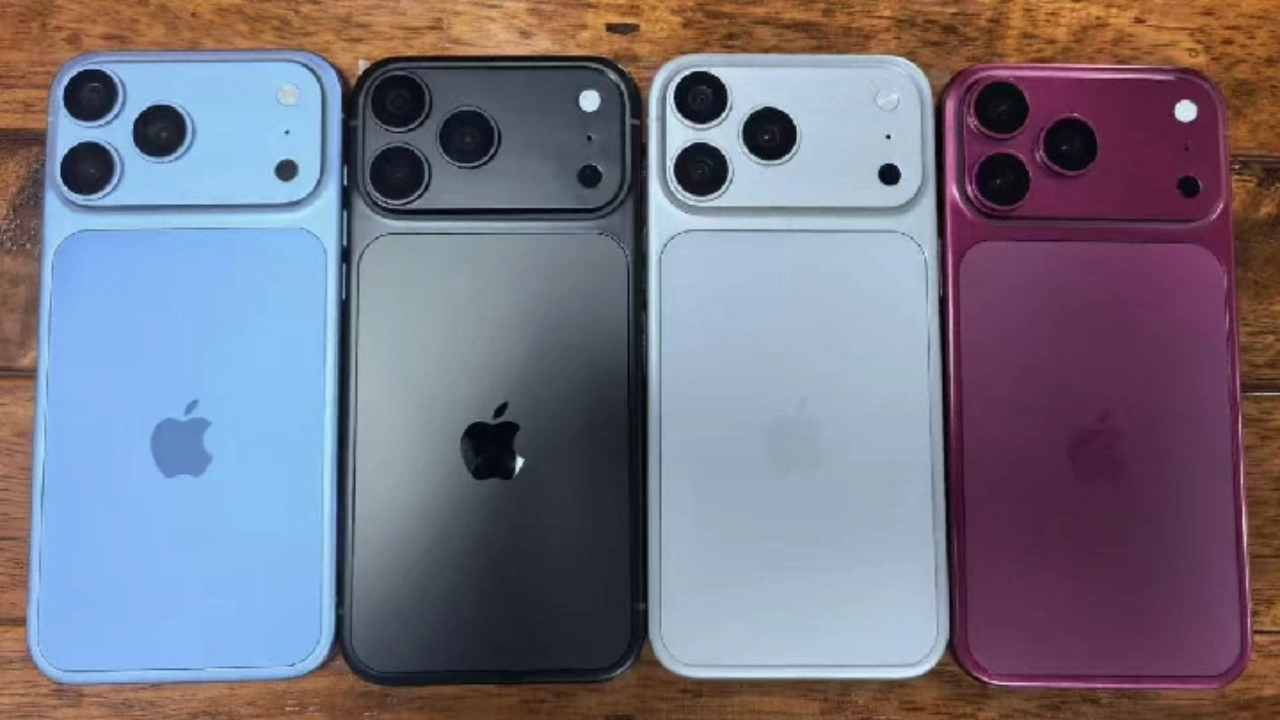
I’ve been covering Apple launches since the iPhone 4 era, and I can’t remember the last time a single product cycle had this many moving parts. This year, Apple isn’t just refreshing a phone — it’s restructuring how it sells phones altogether. If you’ve been holding onto your iPhone 14 or 15 waiting for “the big one,” 2026 is finally that year. But there’s a catch: the iPhone 18 lineup isn’t arriving all at once.
Here’s everything currently known about the iPhone 18 series, broken down the way I’d explain it to a friend asking, “So… should I wait?”
The Biggest Change Isn’t a Spec — It’s the Calendar
For nearly two decades, Apple’s rhythm has been predictable: announce every new iPhone in September, ship them within weeks of each other, done. That pattern is breaking this year.
Instead of one lineup, Apple is expected to split the iPhone 18 family into two waves:
Fall 2026 (September): iPhone 18 Pro, iPhone 18 Pro Max, and Apple’s first-ever foldable iPhone
Spring 2027: The standard iPhone 18, a new iPhone 18e, and a second-generation iPhone Air
If you’re someone who typically buys the standard, non-Pro iPhone, this is the year Apple asks you to wait an extra six months. From what I’ve tracked across past Apple product transitions, this kind of staggered rollout usually happens when a flagship feature (in this case, the foldable) needs the spotlight to itself during the holiday shopping season — without a cheaper model in the same event pulling attention (and budget) away from it.
Expected Release Timeline
Based on the current run of supply-chain reporting, here’s roughly how the fall event is shaping up:
Keynote invitations: Expected in the last week of August 2026
Reveal event: Most likely the second week of September 2026
Pre-orders: Typically open the same Friday as the keynote
In-store availability: About a week to ten days after the keynote, following Apple’s usual pattern
The foldable iPhone may not follow the exact same timeline, though. Several supply chain reports have pointed to tighter production capacity for the folding display and hinge mechanism, meaning the foldable could see a slightly delayed pre-order window or limited initial stock compared to the Pro models. If you want one on day one, I’d set an alarm for pre-order morning and not assume you can just walk into a store later that week.
The standard iPhone 18 and iPhone 18e are expected to land in the March–April 2027 window — mirroring how Apple has handled the “e” series in the past.
iPhone 18 Pro and Pro Max: What’s Actually New
This is normally the section where I’d tell you “it’s an iterative year,” but there’s a genuinely significant architecture change coming under the hood.
A20 Pro chip (2nm process): This is the headline upgrade. Apple’s premium chip is expected to be the company’s first built on a 2-nanometer manufacturing process. In practical terms, that typically translates to better performance-per-watt — meaning either noticeably longer battery life at the same speed, or a real jump in sustained performance for on-device AI tasks, without the thermal throttling that’s plagued flagship phones (Apple included) in recent years.
Camera system: The most interesting rumor here is a mechanical variable aperture on the main camera. This isn’t new to smartphones in general, but it would be new for iPhone. A variable aperture lets the lens physically open or close depending on lighting — wide open in dim rooms for more light, stopped down in bright sunlight for sharper, more controlled shots. If Apple pulls this off well, it closes a gap that’s existed between phone cameras and actual cameras for years.
Design tweaks: Expect Face ID hardware to continue moving further under the display, which should shrink the Dynamic Island cutout further. Don’t expect it to disappear completely — but a noticeably smaller pill-shaped cutout is plausible.
Battery: There’s chatter about higher energy-density battery materials in the Pro Max specifically, which combined with the more efficient A20 chip, could make this one of the biggest real-world battery life jumps in several generations rather than a marginal bump.
Connectivity: Continued investment in Apple’s own C2 modem suggests satellite features may expand beyond emergency messaging toward more general-purpose connectivity in areas without cell coverage — though I’d treat “full satellite browsing” claims with some skepticism until Apple confirms bandwidth and speed details.
The Foldable iPhone: Ultra, Fold, or Something Else?
After close to a decade of on-and-off rumors, this looks like the year Apple actually ships a folding iPhone. The unofficial names floating around are “iPhone Fold” and “iPhone Ultra” — Apple hasn’t confirmed either, and given that Samsung already owns “Galaxy Z Fold,” I’d personally bet against Apple reusing “Fold” as the final product name.
What seems more consistent across reporting:
A book-style folding design, roughly phone-sized closed and tablet-sized open (in the range of a 5.5-inch cover display and a foldable interior display approaching 7.8 inches)
A dual rear camera setup
Pricing that could land north of $2,000, positioning it as Apple’s most expensive iPhone ever
Possible supply constraints at launch due to the complexity of the folding mechanism
If the pattern from other first-generation Apple hardware categories holds (think the original Apple Watch or the first AirPods Max), I’d expect this to be a “proof of concept” flagship — genuinely impressive, priced to reflect that it’s new technology, and refined significantly in its second generation rather than perfected out of the gate.
Pricing: Why Your Next iPhone Will Cost More
This part isn’t really about Apple margin-padding — it’s a global hardware problem. Memory chip costs (DRAM and NAND flash) have been climbing sharply, largely because AI data centers are consuming an enormous share of global memory manufacturing capacity. That’s squeezing every device maker, not just Apple.
Rough current expectations:
iPhone 18 Pro: ~$1,099–$1,199 (modest increase likely)
iPhone 18 Pro Max: ~$1,199–$1,399 (larger increase possible on higher storage tiers)
iPhone Fold / Ultra: $2,000+ (Apple’s most expensive iPhone to date)
iPhone 18 / 18e (Spring 2027): ~$599–$799 (pricing least certain this far out)
Treat these as directional, not final — pricing rumors this far ahead of launch shift constantly, and Apple has historically held Pro Max pricing steadier than base-model pricing even during cost pressure.
Should You Wait, or Buy Now?
After two decades of watching these cycles, here’s my honest read: if you’re currently on an iPhone 13, 14, or older, the A20’s 2nm efficiency gains alone will likely be worth the wait for the Pro line. If you’re on an iPhone 15 or 16 Pro, this generation’s camera and chip upgrades are meaningful, but not urgent — you won’t feel behind waiting one more cycle.
If you’re curious about the foldable specifically, I’d temper expectations for year one. First-generation folding hardware from any manufacturer tends to carry a premium for the idea of the form factor more than a polished, mature experience. That’s not a knock — it’s just how new hardware categories mature.
Frequently Asked Questions
When is the iPhone 18 launch event?
The keynote is widely expected in the second week of September 2026, with the Pro and Pro Max hitting stores about a week later.
Will the standard iPhone 18 launch alongside the Pro models?
No — current reporting points to the standard iPhone 18, iPhone 18e, and second-generation iPhone Air being delayed to spring 2027, separate from the September Pro and foldable launch.
What is the iPhone Fold or iPhone Ultra?
It’s Apple’s rumored first foldable iPhone, expected to open into a tablet-sized display around 7.8 inches while closing down to a regular phone-sized cover screen.
Why are iPhone prices increasing this year?
Rising global memory chip (DRAM/NAND) costs, driven largely by AI infrastructure demand, are pushing component costs — and therefore retail prices — up across the entire smartphone industry, not just for Apple.
Is the A20 chip a big upgrade?
Yes — it’s expected to be Apple’s first chip built on a 2-nanometer process, which typically brings meaningful gains in efficiency and sustained performance rather than just raw speed.