
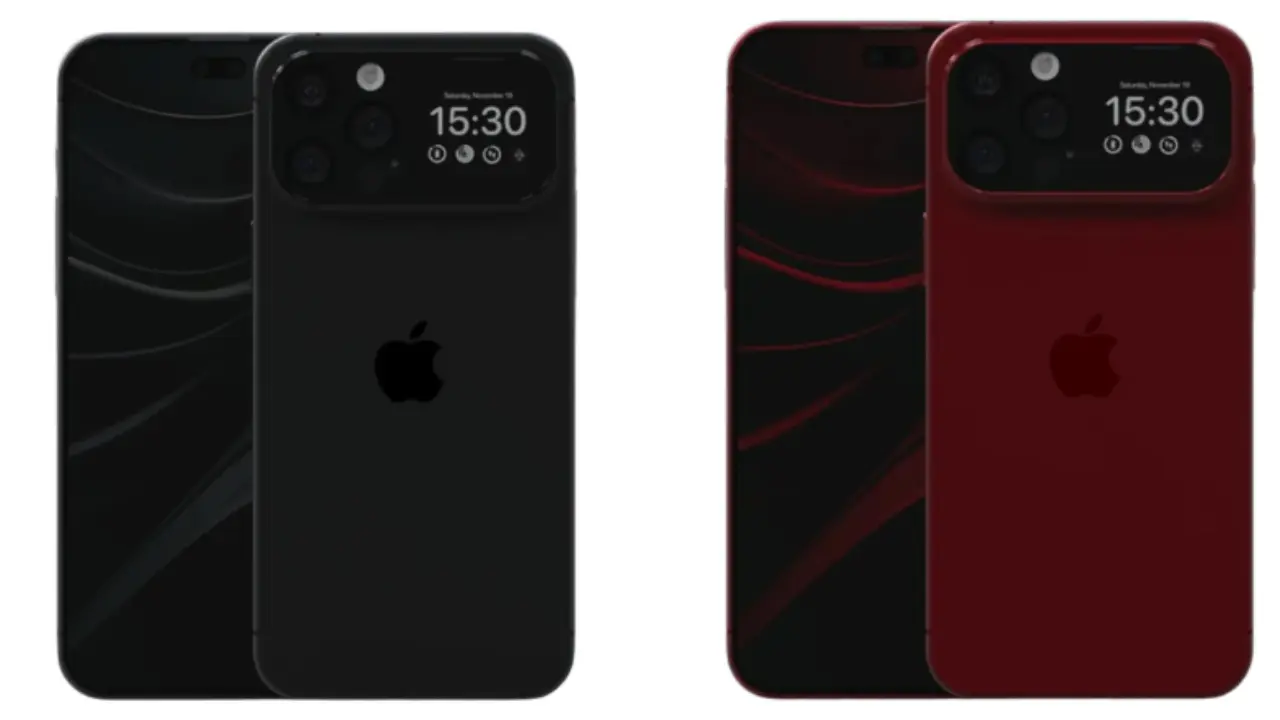
Twenty years of watching Apple launches has taught me one thing: when the company breaks its own rulebook, it’s usually for a reason worth paying attention to. That’s exactly what’s happening with the iPhone 18 generation. For the first time in memory, Apple isn’t shipping one unified lineup in September — it’s splitting six devices across two separate seasons, nearly six months apart.
If you’ve read surface-level coverage of this, you’ve probably seen the basic split: premium phones in fall, cheaper phones in spring. But the details underneath that headline — RAM ceilings that quietly lock people out of AI features, a foldable with Touch ID instead of Face ID, and reported cost-cutting on the “standard” model — matter a lot more if you’re actually deciding what to buy. Let’s go model by model.
Why Apple Is Splitting the Lineup This Year
In a normal year, Apple announces four iPhones in one September keynote and ships them within a week or two of each other. That’s not happening in 2026.
Arriving in fall 2026: iPhone 18 Pro, iPhone 18 Pro Max, and Apple’s first foldable iPhone
Arriving in spring 2027: The standard iPhone 18, the iPhone 18e, and a rumored second-generation iPhone Air
The practical effect: if you’re a standard iPhone buyer rather than a Pro buyer, there’s no new phone for you this holiday season. Apple appears to be using the fall window to put its full marketing weight behind the foldable and the Pro models — its two most expensive, most attention-grabbing products — without a budget option in the same keynote competing for headlines.
iPhone 18 Pro and Pro Max: The Camera Gets a Real Upgrade
The Pro models keep the same general design language as last year’s iPhone 17 Pro — a triple-lens rear camera housed in a raised camera plateau — but with two changes worth caring about.
Variable aperture camera: At least one of the two Pro models is rumored to gain a mechanically adjustable aperture on its main lens. Rather than a fixed opening, the lens would physically widen or narrow depending on the shot. Wide open, it pulls in more light for dim environments; narrowed down, it prevents overexposure in bright daylight and gives more intentional control over background blur. This is one of the few camera changes in years that isn’t just “better processing” — it’s a genuine hardware capability that traditional cameras have had for decades and phone cameras mostly haven’t.
Smaller Dynamic Island: Continued miniaturization of the Face ID sensor array is expected to shrink the pill-shaped cutout at the top of the display further. Interestingly, at least one well-known leaker has suggested this smaller cutout won’t be exclusive to the Pro models — it may show up across the entire iPhone 18 lineup, standard models included.
A20 Pro chip: Built on TSMC’s 2-nanometer node, a meaningful jump down from the 3-nanometer process used in the current A19. Smaller process nodes generally mean better performance-per-watt, which is a fancy way of saying: similar or faster speeds, using less battery to get there.
Modem shift: 2026 may be the year Apple’s own C2 modem debuts in the Pro lineup with mmWave 5G support, a step toward Apple no longer depending on Qualcomm hardware for its highest-end phones.
Design and color: Physical dimensions aren’t expected to change much, though the Pro Max may end up marginally thicker than its predecessor. A deep red finish has also been floated as a new color option for the line.
The iPhone Fold: Apple’s Most Radical Hardware Bet in Years
After roughly a decade of on-again, off-again foldable rumors, this looks like the year it actually happens. Apple hasn’t confirmed a name — “iPhone Fold” is just the placeholder the rumor mill has settled on — but the hardware picture is coming into focus.
Unlike Samsung’s or Google’s taller, narrower folding phones, Apple’s version is expected to use a wider 4:3 aspect ratio when opened. Reported dimensions put the outer cover display at around 5.5 inches, expanding to roughly 7.8 inches once unfolded — closer to a small tablet than an oversized phone. Thickness estimates vary depending on the source, but figures floating around suggest something in the range of 4.5mm unfolded and roughly 9mm folded shut, which would make it one of the thinnest folding phones on the market when open.
A few notable engineering choices set expectations here:
Titanium frame: Likely chosen for rigidity, to help minimize the visible crease down the center of the inner display that’s plagued nearly every foldable phone to date.
Touch ID over Face ID: Because the device needs to stay as thin as possible, Apple is expected to skip Face ID hardware entirely in favor of a Touch ID sensor built into the side button — the same approach used on the iPad Air and iPad mini.
Dual displays: The outer display remains fully usable on its own for quick tasks, with the larger inner display reserved for anything that benefits from extra screen real estate — multitasking, media, or split-view apps.
On price, expect this to be Apple’s most expensive iPhone ever by a wide margin — potentially close to double what the iPhone 17 Pro Max costs, putting it somewhere around the $2,000 mark. Early supply is also expected to be tight; some reporting suggests the Fold could be announced alongside the Pro models in September but not actually ship until closer to December, due to the complexity of folding-display manufacturing.
The Standard iPhone 18 and iPhone 18e: Where the Story Gets Complicated
This is the pair of devices getting the least marketing attention this cycle, and — based on current rumors — possibly the most cost engineering, too.
Display size stays put: No change expected here — the standard iPhone 18 is rumored to keep a 6.3-inch display, while the iPhone 18e holds at 6.1 inches, matching their predecessors.
The RAM question that actually matters: This is worth slowing down on. Rumors are split on how much memory these phones will actually ship with. Some reports suggest a jump to 12GB RAM across the board, which would put the standard iPhone 18 in line with the Pro models and the Fold. Other, more conservative estimates — including from a well-known Apple supply chain analyst — put it at just 9GB, a modest 1GB bump over the iPhone 17.
Here’s why that 3GB gap isn’t just a spec-sheet footnote: two upcoming Apple Intelligence features reportedly require at least 12GB of RAM to function, because they run entirely on-device rather than through the cloud. One lets you adjust the tone and pacing of Siri’s voice; the other improves how accurately dictation converts speech to text. If the iPhone 18 ships with only 9GB, buyers of the “standard” model may find themselves locked out of features their Pro-owning friends get to use — a soft but real form of feature gating based on hardware tier.
A20 chip: The standard models are expected to share the same base A20 chip as the foldable iPhone, while the Pro line gets the higher-performance A20 Pro variant. Both are built on the same 2-nanometer process, so efficiency gains should carry across the lineup even if raw performance differs.
Front camera bump: A jump from 18 megapixels to 24 megapixels on the selfie camera is rumored across the entire 2026 lineup, not just the flagship models.
Display brightness ambitions — and supplier struggles: Apple is reportedly pushing for unusually high brightness targets on the iPhone 18‘s display, to the point that at least one display supplier is said to be having difficulty hitting the requested specifications. Whether that translates to a finished product with dramatically better outdoor visibility, or a spec that gets quietly walked back before launch, remains to be seen.
A simplified Camera Control button: The current Camera Control button relies on two separate sensing systems — one for capacitive touch, one for detecting how hard you’re pressing. Reports suggest the iPhone 18 could simplify this by removing the capacitive layer entirely and relying solely on pressure sensing for all of the button’s functions. It’s a subtle change, but one that would reduce manufacturing complexity and cost.
Modem strategy: Both the iPhone 18 and iPhone 18e may adopt Apple’s next-generation C2 modem. Current chatter suggests Apple could run a split strategy — using Qualcomm modems for US units and its own C2 modem elsewhere — which would hint that the C2 isn’t yet ready to match Qualcomm’s mmWave 5G speeds in every market. If that’s the case, the C2 may be limited to sub-6GHz connectivity for now, which would rule out mmWave support in the US specifically.
One modem-related upside, though: the C2 is expected to support a privacy feature that limits how precisely carriers can pinpoint a device’s location — showing a general neighborhood rather than an exact address. Interestingly, this feature is already present with the C1X modem in the current iPhone 18e’s predecessor lineup, but absent from iPhones still running Qualcomm hardware.
Reports of Cost-Cutting on the Standard Model
Perhaps the most eyebrow-raising thread running through this cycle: multiple reports suggest Apple is actively engineering costs out of the standard iPhone 18, largely in response to sharply rising memory chip prices industry-wide. Rather than raise the retail price to offset those costs, Apple may be narrowing the gap between the iPhone 18 and the more affordable iPhone 18e by sharing more components between them — reportedly to the point where some parts could be interchangeable across both models.
Specific cost-cutting candidates being discussed include a possible reduction in display brightness performance compared to earlier ambitions, and a scaled-back GPU configuration — a 4-core graphics setup instead of the 5-core version that might otherwise have been expected. None of this is confirmed, but the pattern is consistent: Apple appears to be protecting its price point on the standard model by trimming premium touches rather than passing the cost increase directly to consumers.
What Happened to the iPhone Air, and What’s Next
The original iPhone Air launched alongside the iPhone 17 lineup in September 2025 to a reception that, by most accounts, fell short of Apple’s expectations. That underperformance appears to have pushed a second-generation Air out of the fall 2026 window entirely — with current rumors placing it in spring 2027 instead, alongside the standard iPhone 18 and iPhone 18e rather than the Pro launch.
To make the sequel more compelling, Apple is reportedly considering adding a second rear camera to the next iPhone Air — a response to feedback that the single-camera setup on the original model felt like too big of a compromise to justify its roughly $999 starting price.
Pricing Pressure Across the Board
None of this is happening in a vacuum. Apple already raised prices on its Mac and iPad lineups in mid-2026, and most signs point to at least some price increase carrying over to the iPhone 18 family as well — driven largely by the same memory chip cost spike affecting the entire consumer electronics industry. Exactly how much of that gets passed on to buyers, and on which models, is still unclear this far ahead of launch.
My Take: What Actually Matters Here
If I had to boil two decades of Apple-watching down to one piece of advice for this cycle, it’s this: pay closer attention to RAM than usual. In most years, RAM is a spec enthusiasts argue about and everyone else ignores. This year, it may directly determine whether your phone can run features Apple is actively marketing. If you lean on Apple Intelligence for dictation or Siri customization, waiting for confirmation on the standard iPhone 18’s RAM configuration before buying seems like the smart move — even if that means holding out until spring 2027.
For Pro buyers, the variable aperture camera is the most genuinely new capability in years, not just an incremental processing improvement. And for anyone eyeing the Fold, go in with first-generation expectations: impressive engineering, a real price premium, and likely some rough edges that get smoothed out in a second-generation model down the line.
Frequently Asked Questions
Why is Apple splitting the iPhone 18 launch into two parts?
Reports suggest Apple wants the fall keynote focused entirely on its most premium products — the Pro models and the first foldable iPhone — without a budget-friendly option in the same event competing for attention during the holiday shopping season.
Will the standard iPhone 18 have enough RAM for Apple Intelligence?
It’s unclear. Some rumors point to 12GB RAM across the lineup, while others suggest as little as 9GB for the standard model — which would be enough for most tasks, but reportedly not enough to run two on-device Apple Intelligence features tied to Siri voice customization and improved dictation.
What’s different about the iPhone Fold’s design compared to Samsung or Google foldables?
Apple’s foldable is expected to use a wider 4:3 aspect ratio rather than the taller, narrower shape used by most existing foldables, and is rumored to rely on Touch ID instead of Face ID to keep the device as thin as possible.
Is Apple cutting corners on the standard iPhone 18?
Multiple reports suggest cost-saving measures are being considered for the standard model, including a possible reduction in display brightness performance and a scaled-down GPU, largely as a response to rising memory chip costs industry-wide.
When will the iPhone Fold actually be available to buy?
It may be announced alongside the iPhone 18 Pro models in September 2026, but some reports suggest it could ship later — potentially closer to December — due to the complexity of manufacturing a folding display and hinge at scale.
Disclaimer: All details above are based on current supply-chain reporting and industry rumors as of mid-2026. Apple has not confirmed device names, specifications, pricing, or release dates, and any of this is subject to change ahead of an official announcement.