
The 2026 Apple TV 4K is, by most accounts, already finished.
The hardware is built. The chip is selected. The box is ready to ship. According to Bloomberg’s Mark Gurman — one of the most reliable Apple supply‑chain reporters in the industry — the new Apple TV 4K has reportedly been sitting in a “ready to launch” state for months. And yet, as of late May 2026, it still hasn’t arrived on Apple’s store shelves.
The reason it isn’t here yet is also the most important thing to understand about what this device is becoming.
According to reporting, Apple is holding the 2026 Apple TV 4K until a significantly improved version of Siri — one powered by Apple Intelligence and intended to be more conversational and context‑aware — is ready to ship alongside the hardware. That updated Siri is expected to arrive with iOS 27, with a public release window likely in September 2026. The Apple TV 4K should follow when that software is ready.
That delay is not a sign of trouble. It’s a signal of ambition. For the first time in the Apple TV’s history, Apple appears to believe the software layer matters more than the hardware release schedule. The company is willing to sit on finished hardware for months rather than ship a device before the intelligence layer that defines its purpose is ready.
That’s a fundamentally different Apple TV than the one that’s been quietly doing its job under your television since 2022. Understanding what’s changed — and what’s actually confirmed versus what remains rumor — is what this piece is for.
Key highlights (based on reporting as of May 2026)
- The 2026 Apple TV 4K hardware is reportedly ready to ship but has been deliberately held by Apple pending an updated Siri experience.
- Launch is now widely expected to be tied to iOS 27 and the upgraded Siri arriving in fall 2026 at the earliest, though Apple has not confirmed a schedule.
- The most credible rumor is a new A‑series chip — most likely the A17 Pro, the oldest chip currently associated with Apple Intelligence support.
- The A17 Pro brings a 3‑nanometer architecture, improved CPU and GPU performance, better power efficiency, and a Neural Engine that can better support on‑device AI workloads.
- Networking upgrades are rumored to include Apple’s N1 networking chip with Wi‑Fi 7 support for the 6 GHz band, plus Bluetooth 6 and continued Thread border‑router capability for smart‑home devices.
- Design is expected to be unchanged — same squircle shape, same black‑plastic exterior as the 2022 model.
- A price drop or two‑tier pricing model is rumored but unconfirmed. Analyst Ming‑Chi Kuo has previously suggested under $100 as an attractive price point.
- A new full‑size HomePod and an updated HomePod mini are also reported to be on hold for the same Siri‑linked launch window, though Apple has not officially confirmed this.
- The current Apple TV 4K (2022) with the A15 Bionic chip cannot run Apple Intelligence features, making any hardware upgrade a genuine requirement for AI‑centric capabilities, not just a speed bump.
Why a streaming box is suddenly worth talking about again
For the better part of a decade, the Apple TV update cycle had a predictable rhythm: a slightly faster chip, maybe a price change, and a few software improvements. Useful if your old one was failing. Easy to skip if it wasn’t.
The 2026 model breaks that pattern, and the reason has almost nothing to do with streaming quality or benchmark scores.
The living room has gotten complicated.
The average household in 2026 is managing half a dozen streaming subscriptions spread across platforms with incompatible search systems. Smart‑home devices — lights, thermostats, cameras, door locks, speakers — live across multiple apps and ecosystems that only partially talk to each other. Family members have different taste profiles that no TV interface handles gracefully. And the voice assistants available on most devices are, despite years of promises, still frustratingly literal and context‑deaf.
None of these are problems that a faster chip alone solves. They’re problems that a genuinely intelligent Siri — one that understands context, handles multi‑step requests, and functions as a real household interface rather than a voice‑activated remote control — could begin to address.
That’s the Apple TV Apple is building. The chip upgrade enables it. The Siri upgrade defines it.
What’s well‑supported: The hardware picture
Based on reporting from MacRumors’ Juli Clover, Mark Gurman at Bloomberg, and consistent supply‑chain sources, here’s what is credibly expected in the 2026 Apple TV 4K hardware (all details remain pre‑announced and speculative):
The chip: A17 Pro (or possibly newer)
The most significant and well‑sourced upgrade is the processor. The current Apple TV 4K runs on the A15 Bionic — a chip that, while still capable for streaming, predates Apple Intelligence entirely. The A17 Pro is the minimum chip Apple currently uses to support Apple Intelligence features across its lineup, including the iPad mini 7.
According to reporting, the 2026 Apple TV 4K is expected to use an A‑series chip at least as advanced as the A17 Pro, likely built on a 3‑nanometer process. In practical terms, that means faster CPU and GPU performance, significantly better power efficiency, and hardware‑accelerated ray tracing for games and graphics‑intensive content.
MacRumors and other outlets note that given how long this update has been delayed, Apple could jump beyond the A17 Pro to an A18 or A18 Pro‑class chip. A RAM upgrade, likely to 8 GB to better support AI‑heavy workloads, is also widely expected.
Wi‑Fi 7 and Apple’s N1 networking chip
The current Apple TV 4K supports Wi‑Fi 6. The 2026 model is expected to include Apple’s N1 networking chip, bringing Wi‑Fi 7 with support for the 6 GHz band.
For a device whose entire purpose is streaming high‑quality video, this matters more than it might seem. The 6 GHz band is faster and significantly less congested than the 2.4 GHz and 5 GHz bands that most home devices compete on. Real‑world streaming reliability — particularly in households with many connected devices — should improve meaningfully.
Bluetooth 6 and Thread
The 2026 Apple TV is expected to support Bluetooth 6, which improves connection range, reliability, and precision for accessories like game controllers and earbuds.
Crucially, Apple’s N1 chip is also reported to fully support Thread — the low‑power mesh networking protocol for smart‑home devices. The Apple TV already functions as a Thread border router and Matter hub. The 2026 model is expected to continue and expand that role, reinforcing Apple’s positioning of the device as a central smart‑home controller in the living room.
Design: Identical on the outside
No changes to the exterior are expected. Same squircle shape, same black‑plastic build, same size as the current model. Apple TV design updates happen rarely, and 2026 doesn’t appear to be the year. If you’re hoping for a visual refresh, manage expectations accordingly.
The real story: Why Siri is the whole point
Here’s what separates the 2026 Apple TV from every prior update: Apple is reportedly tying its launch to a smarter Siri.
According to Mark Gurman, Apple originally planned to launch the new Apple TV in spring 2026 alongside upgraded Siri capabilities arriving in an iOS 26 point‑release. Those Siri improvements reportedly ran into reliability issues and were pushed back to iOS 27, with a public release expected in September 2026. The Apple TV — along with a new full‑size HomePod and updated HomePod mini, which are also waiting on the same software layer — is expected to follow.
The version of Siri coming with iOS 27 is described as a generational shift from what exists today. Where current Siri handles discrete commands reliably and contextual follow‑ups inconsistently, the next‑generation Siri is intended to be more conversational, multi‑step, and context‑aware, with on‑device processing for privacy‑sensitive tasks via Apple Intelligence.
For a phone or a laptop, that upgrade is convenient. For a television operated from across the room — by multiple family members with different preferences, different ages, and different levels of comfort with technology — it could be transformational.
Think about the actual friction points of using a smart TV today:
- You know the film you want to watch but can’t remember which of your six apps has it.
- You want recommendations that account for what your partner has already seen.
- You want to control your smart‑home lights and thermostat without walking to a different app or reaching for another device.
- You want the TV to recognize who’s sitting in front of it and surface the right content without a profile‑switching menu.
These are not hardware problems. A faster chip can’t fix them. A conversational Siri that understands intent, remembers context, and connects to Apple’s broader ecosystem — HomePod, HomeKit, Matter, iPhone — potentially can.
That’s the product Apple is reportedly building. And it’s why the company is willing to hold finished hardware on a shelf rather than ship it before the intelligence is ready.
The smart‑home angle: Apple TV as living‑room brain
The simultaneous delay of the Apple TV, new HomePod, and HomePod mini isn’t a coincidence. It reflects a coordinated product strategy emerging from industry reporting.
Apple is said to be moving toward a smart‑home architecture where:
- HomePod handles ambient, room‑based voice interaction and spatial audio.
- HomePod mini covers smaller rooms and satellite voice control.
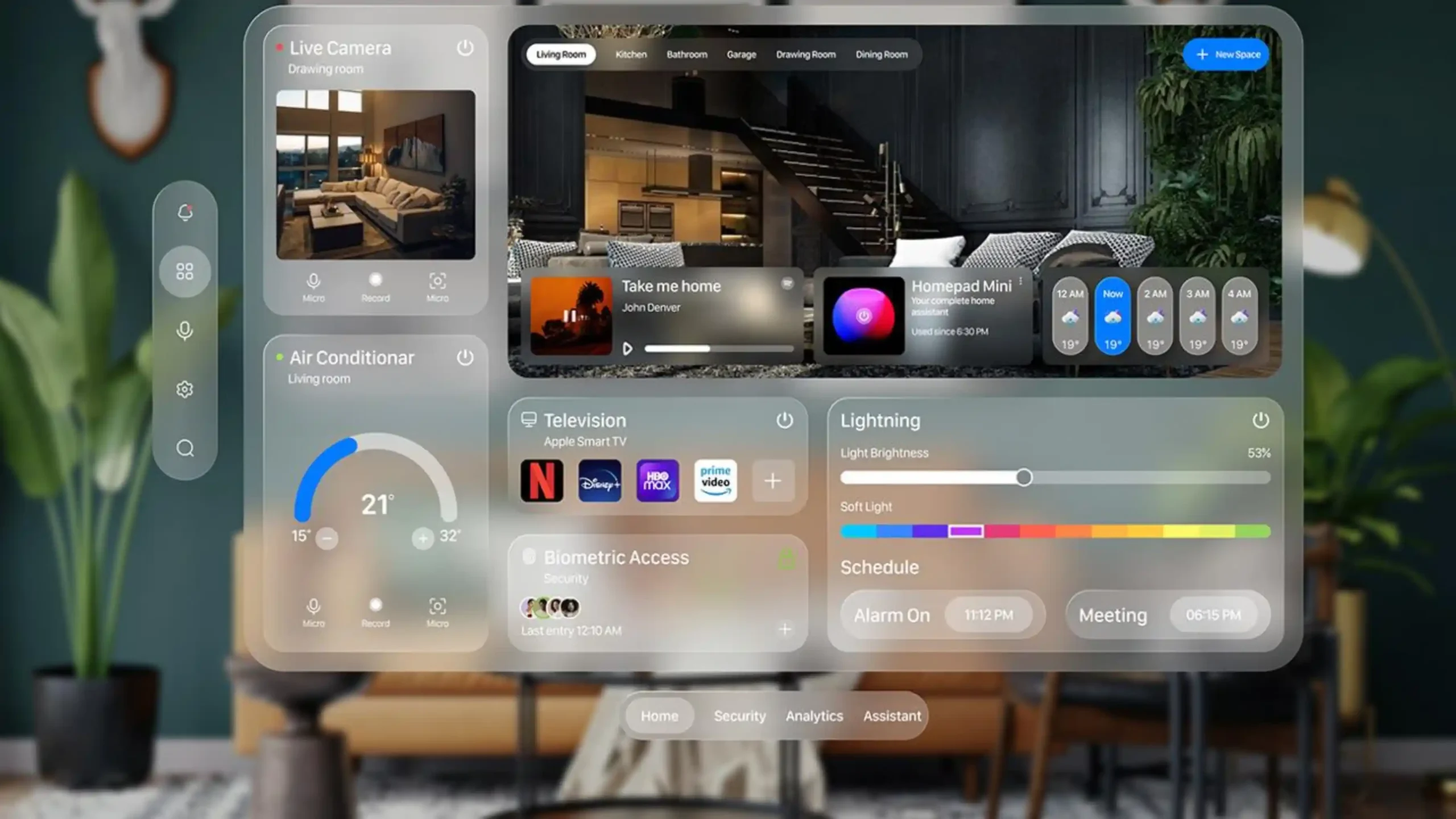
- Apple TV serves as the visual interface layer — the screen through which you see, manage, and interact with your connected home.
The Apple TV already supports Matter and Thread, meaning it can communicate with smart‑home devices across different manufacturers and ecosystems. Wi‑Fi 7 and improved Thread support in the 2026 model would strengthen that hub role further. A smarter Siri that can handle multi‑device home commands from the couch would close the loop.
The competitive context here is real. Amazon and Google have dominated the living room for years with affordable, often subsidized streaming hardware. Apple’s traditional response — premium hardware, tighter ecosystem integration, and stronger privacy — has always been a coherent counter‑strategy, but it depends on that premium being genuinely justifiable.
A device that just streams Netflix isn’t a sufficient justification for paying more than a $35 Chromecast. A device that serves as an intelligent household interface — surfacing personalized content, managing your smart home, connecting to your broader Apple ecosystem, and doing all of it with on‑device AI processing that keeps your data private — might be.
Should you buy the current Apple TV 4K now or wait?
This is the most practical question, and it deserves a direct answer based on your situation.
Buy the current model now if: You need a replacement immediately and primarily want a premium streaming device. The 2022 Apple TV 4K with the A15 Bionic still delivers flawless 4K HDR, Dolby Vision, Dolby Atmos, and a genuinely excellent streaming experience. It’s not going to feel slow or unsupported for streaming purposes anytime soon.
Wait if: You’re in the Apple ecosystem and care about any of the following — Apple Intelligence‑style features, smarter Siri interaction, long‑term future‑proofing, better smart‑home integration, or improved gaming via hardware‑accelerated ray tracing. The rumored chip jump from A15 to A17 Pro is substantial by any measure, and the A15 is definitively outside Apple’s AI hardware roadmap. Buying now means buying a device Apple is already designing around. With a September 2026 launch window looking increasingly likely, the wait is five months at most.
According to gadget‑oriented outlet Gadget Hacks’ roundup of the situation, the current model is not broken, and it won’t stop working after the new one launches. But if you can wait, you should. What’s on the way looks like a more substantial generational shift than most Apple TV updates.
Expert analysis: The delayed launch is the strategy, not a setback
It’s tempting to frame Apple’s repeated delays on the 2026 Apple TV as a stumble. Hardware ready for months. Multiple launch windows missed. Siri‑reliability issues pushing the timeline to fall 2026.
But there’s a different way to read it, and it may be more accurate.
Apple appears to be making a deliberate bet that the intelligence layer defines this product — not the chip, not the design, and not the price. By holding the device until Siri is ready to deliver on the experience the company is promising, Apple is prioritizing product integrity over the financial quarter it ships in. That’s a discipline most hardware companies don’t exercise.
The competitive stakes are higher than they’ve been in years. Google is pushing Gemini‑powered smart‑home and living‑room experiences through Android TV and Google Home. Amazon continues investing in Alexa’s role as a household AI. If Apple ships a new Apple TV with the same limited Siri that exists today and calls it an AI‑driven upgrade, the gap between promise and experience becomes a real vulnerability.
Waiting for a Siri that actually delivers changes that equation. A device that genuinely understands “Find that documentary about deep‑sea diving I started on my iPad last week” — and handles it reliably — is worth the delay. A device that mostly works and occasionally frustrates is not worth the premium Apple charges.
The tvOS dimension is underappreciated. The current tvOS interface was designed for an era when Apple TV was primarily a streaming device operated by one or two people who understood the remote. As the device’s role expands to household AI hub and smart‑home controller, the interface requirements change fundamentally. Larger text, cleaner navigation, better multi‑user handling, and distance‑optimized UI — these aren’t minor quality‑of‑life tweaks; they’re the foundation of a device that works for everyone in the house, not just the person who set it up.
Accessibility, too, is becoming a genuine differentiator. Apple’s ongoing investment in larger text and accessibility features for tvOS reflects something real about where the living room is headed. As populations age and the television becomes a primary digital interface for more people, a platform designed around the 10‑foot viewing experience — with voice controls that actually work and text that’s actually readable from the couch — has a structural advantage that raw hardware specs alone don’t capture.
Pros and cons
Pros
- A17 Pro‑class chip (or newer) opens the door to Apple Intelligence‑style capabilities on Apple TV for the first time — a genuine generational capability shift.
- Wi‑Fi 7 with 6 GHz support should improve streaming reliability in congested home networks.
- Thread and Matter support reinforce Apple TV’s role as a smart‑home hub.
- A smarter Siri could solve real living‑room friction points that hardware alone has never been able to address.
- Hardware‑accelerated ray tracing opens Apple Arcade and App Store‑style games on Apple TV to more console‑like visuals.
- Buying at the start of a new product cycle offers the longest horizon of software support.
- A simultaneous HomePod‑family refresh could create a more coherent whole‑home Apple audio and AI ecosystem.
Cons
- No confirmed launch date — September 2026 is the current best estimate, but Apple has not publicly committed.
- Design is rumored to be unchanged — buyers expecting a visual refresh may be disappointed.
- Pricing remains unresolved — a rumored sub‑$100 model and a tiered strategy are speculative and unconfirmed.
- Next‑generation Siri has reportedly been delayed once; another slip would push the Apple TV launch further.
- Smart‑TV platforms have improved significantly — Apple TV’s value proposition depends heavily on Siri delivering on its promise.
- A full‑lineup HomePod refresh at the same time could create supply constraints at launch.
Future impact: The living room as Apple’s next platform
The Apple TV has always been Apple’s quietest product. No annual event. No celebrity keynote moment. No super‑cycle. Just a small black box that reliably does its job and rarely generates headlines.
The 2026 model could change that — not through spectacle, but through utility.
If Apple Intelligence‑style features on Apple TV genuinely deliver contextual, conversational search across streaming services; if Siri can manage smart‑home devices reliably by voice from across the room; if the device becomes the visual center of a connected‑home ecosystem that includes HomePod, iPhone, and HomeKit — then Apple TV stops being a streaming accessory and starts being infrastructure.
That’s a different product category. And it’s one where Apple’s advantages — ecosystem depth, on‑device AI processing, privacy‑focused architecture, and tight hardware‑software integration — are more durable than they are in the streaming‑box market, where Amazon and Google will always be willing to sell hardware at or even below cost.
The living room is the last room in the home that hasn’t been fully colonized by a coherent AI platform. Apple TV, HomePod, and iOS 27’s Siri improvements are reportedly a coordinated bid to make Apple the platform that wins it.
Whether that bid succeeds depends almost entirely on whether the upgraded Siri is actually as capable as the product strategy requires. Every part of the 2026 Apple TV’s value proposition rests on that one promise. The hardware is ready. The question is whether the intelligence will be.
Frequently Asked Questions
When will the 2026 Apple TV 4K be released?
Apple has not announced an official release date. Based on reporting from Bloomberg’s Mark Gurman and other outlets, the new Apple TV 4K is tied to iOS 27 and the upgraded Siri that ships with it. iOS 27 is expected to debut at WWDC 2026 with a public release in September 2026, making that window the earliest realistic launch target for the 2026 Apple TV 4K.
What chip will the 2026 Apple TV 4K use?
Rumors point to the A17 Pro, the same chip used in iPhone 15 Pro and the iPad mini 7. The A17 Pro is the minimum A‑series chip currently associated with Apple Intelligence support. Given how long the launch has been delayed, an even newer chip — such as the A18 or A18 Pro — is also possible. A RAM upgrade to 8 GB is widely expected.
Why is Apple delaying the new Apple TV?
According to Mark Gurman, Apple is holding the new Apple TV 4K — along with a new full‑size HomePod and updated HomePod mini — until a significantly improved version of Siri, powered by Apple Intelligence, is ready. The upgraded Siri was initially expected in an iOS 26 point‑release but has reportedly been pushed back to iOS 27 in fall 2026.
Will the 2026 Apple TV support Apple Intelligence?
Industry reporting suggests that a 2026 Apple TV 4K equipped with an A17 Pro‑class chip would be the first‑generation Apple TV hardware capable of Apple Intelligence‑style features. However, Apple has not yet detailed how those capabilities will appear on tvOS, so the exact feature set remains speculative.
What networking improvements are expected?
The 2026 Apple TV 4K is expected to include Apple’s N1 networking chip with Wi‑Fi 7 support, enabling connections to the 6 GHz band for faster, less congested streaming. Bluetooth 6 is also expected for improved controller and earbud connectivity, along with continued Thread border‑router support for smart‑home devices.
Will the design change?
No credible reports indicate a design change. MacRumors and other outlets expect the 2026 Apple TV 4K to retain the same squircle shape, black‑plastic construction, and overall size as the current model. The upgrade is expected to be entirely internal.
Should I buy the current Apple TV 4K or wait?
If you need a streaming device right now and don’t prioritize Apple Intelligence‑style features or smart‑home hub capabilities, the current model is still excellent. If you care about smarter Siri interaction, long‑term ecosystem support, or better gaming and AI potential, waiting for the 2026 model makes strong sense. The chip jump alone is substantial, and a September 2026 launch window is not far away.
Will there be a cheaper Apple TV option?
Analyst Ming‑Chi Kuo has previously suggested that a sub‑$100 price point would be attractive. Other rumors suggest Apple could introduce a lower‑priced model, retain the current Apple TV 4K as an entry‑level option, or both. Nothing is confirmed at this time.
Conclusion
The 2026 Apple TV 4K isn’t late because something went wrong. It’s late because Apple appears to have made a decision: ship this device when the software that defines it is ready, or don’t ship it at all.
That’s a bet on the future of the living room — on the idea that what people actually want from the screen at the center of their home isn’t a faster box, but a smarter one. One that understands what you mean, not just what you say. One that connects your entertainment, your smart home, and your broader Apple ecosystem into something coherent enough to feel like it was actually designed for how you live.
Hardware‑wise, the A17 Pro would bring Apple Intelligence‑style capabilities to the living room for the first time. Wi‑Fi 7 and Thread would strengthen the home‑network foundation. And a new Siri — more conversational, more contextual, and more capable of on‑device intelligence — is expected to arrive in fall 2026 to complete the picture.
Whether the final product justifies the wait is a question only the shipped Apple TV 4K can answer. But for the first time in years, the question is genuinely interesting. And for an Apple TV update, that alone is remarkable.
What do you think?
The 2026 Apple TV 4K update is either the most consequential refresh in the product’s history — or just a streaming box with a better chip and the same limitations. Which direction it goes depends almost entirely on how good the new Siri actually is when it ships.
Where do you stand? Is a smarter Siri enough to make you upgrade from your current setup? Does the smart‑home hub angle change how you think about what a TV box is for? Would a sub‑$100 price point finally make Apple TV the obvious choice for households that haven’t yet committed to the Apple ecosystem?
Share your take in the comments. If this breakdown helped you decide whether to wait or buy now, pass it along to someone facing the same choice. And follow for full coverage of the Apple TV launch, iOS 27, and the fall 2026 Apple hardware cycle — because the wait is almost over.
This article is based on credible industry reporting as of May 2026. Key sources include Mark Gurman at Bloomberg, Juli Clover’s Apple TV 4K reporting at MacRumors, Gadget Hacks’ Apple TV 4K rumor roundups, and corroborating supply‑chain information. Apple has not yet publicly confirmed any details of the 2026 Apple TV 4K, and all specifications and timelines remain subject to change.