
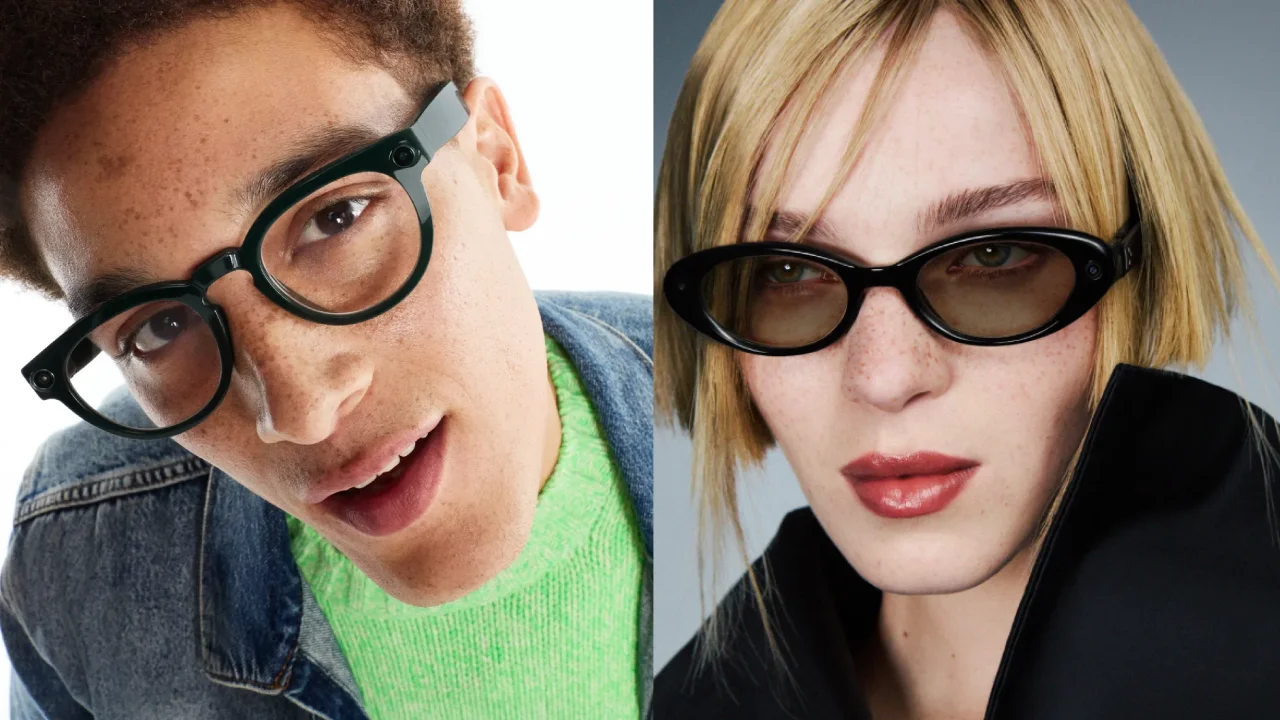
Smart glasses have had more second chances than almost any other product category in tech.
Google Glass launched in 2013 and became a cultural cautionary tale. Snap’s Spectacles found a niche but never broke through. Meta’s Ray-Bans moved the needle slightly, mostly on the back of their camera. But none of them answered the question that actually matters: why would someone wear these every single day?
At Google I/O 2026, Google made its most credible attempt yet to answer that question.
The company revealed new details about its Android XR platform — including a major expansion into AI-powered smart glasses built around Gemini. Developed in collaboration with Samsung and Qualcomm, and styled in partnership with Gentle Monster and Warby Parker, these aren’t the clunky, camera-forward experiments of a decade ago. They’re designed to disappear into your day — not demand attention from it.
Google is calling the experience “hands-free and heads-up”. That phrase is deliberate. It signals something important about where the company thinks ambient computing is heading: not toward more screens, but toward fewer of them.
Whether that vision holds up in the real world is the real question. But on the strength of what Google showed at I/O 2026, this is the most serious smart glasses push the industry has seen since the original Glass — and this time, the AI infrastructure actually exists to back it up.
Key Highlights
- Google officially unveiled Android XR smart glasses powered by Gemini at I/O 2026
- Two categories of intelligent eyewear: Audio Glasses (launching this fall) and Display Glasses (coming later)
- Built on a three-way platform collaboration between Google, Samsung, and Qualcomm
- Fashion partnerships with Gentle Monster and Warby Parker prioritize all-day wearability
- Core capabilities include real-time translation, contextual visual assistance, hands-free navigation, AI photo editing, and voice-controlled app management
- Compatible with both Android and iOS devices
- Gemini acts as a proactive AI agent capable of executing multi-step tasks
- New Nano Banana AI photo editing enables conversational image modifications by voice
- App integrations confirmed with Uber, DoorDash, and Mondly at launch
Why This Moment Feels Different From Every Previous Smart Glasses Launch
The history of smart glasses is essentially a history of technology arriving before the supporting ecosystem was ready for it.
Google Glass had the hardware concept right but lacked the AI to make it genuinely useful, the design language to make it socially acceptable, and the platform ecosystem to make it indispensable. What it had was a camera on your face — and in 2013, that was enough to make the public deeply uncomfortable.
Thirteen years later, the context has changed in three significant ways.
First, AI has fundamentally matured. Gemini’s multimodal capabilities — the ability to understand and respond to both what a user says and what their camera sees — didn’t exist in any practical form a decade ago. Real-time visual analysis, contextual environmental understanding, and conversational task execution are now things Google can actually deliver at scale.
Second, wearable computing has become normalized. Tens of millions of people wear wireless earbuds and smartwatches for hours every day. The cultural resistance to technology on your body has largely faded — provided the device still feels natural and wearable.
Third, and perhaps most importantly, Google has learned from its mistakes. The Android XR strategy is built explicitly around the lessons of Glass: lead with fashion, not function. Make the device invisible before making it powerful.
That combination — mature AI, normalized wearables, and a more thoughtful design philosophy — is what makes 2026 feel genuinely different for smart glasses.
And honestly, that’s the part Google never truly got right with Glass.
Android XR: Google’s Unified Platform for Spatial and Wearable Computing
Before getting into the glasses themselves, it’s worth understanding what Android XR actually is — because the glasses are only one piece of a much larger platform strategy.
Android XR is Google’s operating platform for spatial and wearable computing, developed in collaboration with Samsung and Qualcomm. It’s designed to unify smart glasses, headsets, mixed reality devices, and future wearable AI hardware under a single ecosystem — much the same way Android unified the fragmented smartphone market in the late 2000s.
That comparison is intentional. Google isn’t just building a product here. It’s building a platform.
Samsung brings hardware scale and consumer electronics expertise. Qualcomm provides the specialized XR chipsets that make AI processing feasible in a lightweight wearable form factor. Google contributes Gemini AI, Search, Maps, Android, and its massive developer ecosystem.
The contrast with Apple’s Vision Pro approach is striking. Apple’s strategy focuses on immersive, premium spatial computing sessions. Google’s Android XR vision is more ambient and lightweight — an always-available layer of contextual assistance designed for everyday life.
Both visions have merit. But Google’s bet on all-day wearability targets a significantly larger long-term market.
Two Types of Smart Glasses, One Long-Term Strategy
Audio Glasses — Launching First
Audio glasses are the first wave, and strategically, this is probably the smartest decision Google could have made.
These glasses prioritize spoken AI assistance over visual overlays. They include discreet speakers, microphones optimized for Gemini voice interaction, contextual environmental awareness, and lightweight cameras — all within frames that resemble ordinary eyewear.
Their capabilities are substantial:
- Real-time navigation without checking a phone
- Hands-free calls, messages, and summaries
- Real-time language translation
- Contextual AI assistance based on surroundings
- Voice-controlled app interactions
- Ambient notifications without screen dependency
The audio-first strategy solves several major wearable problems simultaneously: battery life, thermal management, comfort, and social friction.
Without a constant visual display, the glasses become dramatically easier to wear for long periods. And because they resemble ordinary eyewear, they avoid the futuristic awkwardness that hurt earlier smart glasses products.
Leading with audio glasses isn’t a compromise. It’s the correct product sequencing.
Display Glasses — Coming Later
Display glasses represent the longer-term vision: transparent lenses capable of overlaying digital information directly into the user’s field of view.
Navigation arrows, contextual data, live notifications, augmented reality overlays, and ambient digital interfaces could eventually appear directly on the lens without requiring any phone interaction.
Google hasn’t released complete specifications yet, and broader availability remains undefined. But the strategy is clear: establish habits and ecosystem momentum first, then introduce more advanced visual interfaces later.
Why the Warby Parker and Gentle Monster Partnerships Matter So Much
Wearables succeed or fail based on one brutally simple reality: people have to actually want to wear them.
That’s where Google appears to have genuinely evolved.
The original Google Glass looked like a prototype built by engineers for engineers. Android XR smart glasses, by contrast, are being developed alongside fashion-forward eyewear brands like Gentle Monster and Warby Parker.
That matters more than many people realize.
Gentle Monster built its global reputation around bold luxury eyewear aesthetics. Warby Parker built theirs around comfortable, everyday frames designed for mainstream consumers. Together, they help Google address both fashion-conscious users and practical daily wearers.
The broader wearables market already proved this lesson. Smartwatches only became mainstream once companies started treating them like fashion accessories rather than miniature computers. Smart rings are following the same trajectory.
If Android XR glasses genuinely look and feel like something people would choose to wear anyway, Google solves one of the biggest adoption barriers before the product even launches.
What Gemini Can Actually Do on Smart Glasses
The hardware gets users to put the glasses on. Gemini is what convinces them to keep wearing them.
Contextual Visual Intelligence
Point the camera at a restaurant and ask for its rating. Look at a parking sign and ask Gemini to explain it. Glance at a foreign-language menu and hear a translation instantly.
This is environmental search — the ability to query the physical world the same way people currently query Google Search online.
The difference is friction. Users no longer need to stop, unlock a phone, open an app, and search manually. The interaction becomes immediate and conversational.
Hands-Free Navigation
Because the glasses understand orientation, movement, and location in real time, navigation becomes something users hear instead of something they constantly watch.
Gemini can provide spoken directions, reroute journeys, suggest nearby locations, and update routes dynamically without forcing users to stare at a screen while walking.
For anyone who has nearly walked into traffic while checking navigation on a phone, that’s more than convenience — it’s a meaningful safety improvement.
Agentic Task Execution
This may be the most important shift Google demonstrated.
Gemini isn’t just answering questions. It’s acting on behalf of users.
Need to order food while walking home? Gemini can complete most of the workflow in the background. Want to book an Uber while carrying groceries? Done through voice interaction. Need summaries of missed messages after a meeting? Gemini can read them conversationally as users move through their day.
That shift — from reactive assistant to proactive agent — fundamentally changes the relationship between people and their devices.
Real-Time Translation
Language translation has always been one of wearable AI’s most compelling potential use cases.
Google’s implementation includes both text and speech translation, with more natural voice playback designed to keep conversations flowing rather than interrupting them.
The key advantage over smartphone translation apps is continuity. Users don’t need to hold up a device or pause interaction. The conversation simply continues while translation happens in the background.
According to Statista, the global wearable technology market is expected to continue expanding rapidly throughout the decade, reflecting increasing consumer comfort with always-on connected devices and ambient computing experiences.
AI Photo Editing With Nano Banana
Google also demonstrated a feature called Nano Banana — a conversational AI photo editing tool integrated directly into the Android XR workflow.
Users can capture photos hands-free and edit them using natural language commands like:
- “Remove the person in the background”
- “Make this look like sunset”
- “Add funny hats to everyone”
It’s an early glimpse of how generative AI creativity tools may eventually become embedded directly into wearable devices rather than standalone applications.
Expert Analysis: Google May Be Building the First Truly Practical AI Wearable
Step back from the feature list and a larger strategic picture emerges.
Google isn’t really building smart glasses. It’s building the next interface layer for human-computer interaction.
And it’s betting that interface will be ambient, AI-mediated, and increasingly screenless.
That’s a major bet. But it’s grounded in a real behavioral trend.
The most successful consumer devices of the past decade — smartwatches, wireless earbuds, voice assistants — all reduced friction between people and information without demanding constant visual attention.
Android XR glasses are the logical next step in that progression.
Meta’s Ray-Bans proved consumers are open to smart eyewear if the design feels natural. Apple’s Vision Pro legitimized spatial computing as a serious category, even if its size limits mainstream wearability. Samsung’s involvement gives Android XR hardware credibility from day one.
Google’s biggest advantages may ultimately be its ecosystem strengths:
- Google Maps
- Search infrastructure
- Android ecosystem scale
- Gemini multimodal AI
- Open developer platform support
If Google executes effectively, Android XR could become to spatial computing what Android became to smartphones: the platform that wins by becoming everywhere.
That said, the risks are real.
Wearable cameras will continue to raise serious privacy concerns. Battery life remains largely unproven outside demos. Social acceptance is still uncertain. And Gemini’s agentic reliability will face real scrutiny once users depend on it for everyday tasks.
None of those issues are fatal. But they’re important context for what remains, at least for now, a highly promising vision rather than a fully proven product.
Pros and Cons
Pros
- Hands-free AI assistance reduces smartphone dependency
- Audio-first strategy improves battery life and wearability
- Fashion partnerships make mainstream adoption more realistic
- Real-time translation removes friction from multilingual interaction
- Cross-platform Android and iOS compatibility expands usability
- Agentic task execution moves Gemini beyond traditional voice assistants
- Open Android XR ecosystem encourages developer innovation
- Contextual visual intelligence turns the environment itself into a searchable interface
Cons
- Wearable cameras raise privacy and surveillance concerns
- Battery performance in real-world all-day use remains unknown
- Gemini’s autonomous reliability is still unproven
- Display glasses have no confirmed release timeline
- Social acceptance of AI glasses is still uncertain
- Prescription compatibility and long-term comfort remain open questions
- Some features may work better inside the Android ecosystem than on iOS
Future Impact: Are We Moving Beyond Smartphones?
The smartphone has dominated personal computing for nearly two decades.
Android XR glasses represent one of the most credible attempts yet to shift that center of gravity.
Not immediately. And probably not completely.
But Google is clearly designing these devices to become the primary interface for many daily interactions that currently require a phone: navigation, communication, translation, environmental search, and task management.
If Gemini’s agentic capabilities mature successfully, the number of interactions that truly require a screen could shrink dramatically.
The deeper trend here is ambient computing — technology that assists continuously and contextually rather than demanding constant interruption.
Smart speakers brought ambient computing into homes. Smartwatches brought it onto wrists. Smart glasses may bring it directly into everyday perception.
Each technological shift initially feels incremental — until suddenly it doesn’t.
The smartphone replaced cameras, GPS devices, MP3 players, alarm clocks, and calendars so gradually that most people barely noticed until the transition was complete.
Android XR could represent the beginning of a similar shift.
Whether that transition happens in three years or ten depends on how effectively Google solves the remaining hard problems: privacy frameworks, battery life, display technology, and the reliability required for truly trustworthy AI assistance.
The roadmap is clear. The destination feels increasingly plausible. Execution is what remains to be proven.
Frequently Asked Questions
What are Android XR smart glasses?
Android XR smart glasses are AI-powered wearable glasses built around Google’s Gemini AI platform. Unlike older smart glasses that mainly focused on photos or notifications, Android XR emphasizes contextual assistance, translation, navigation, and conversational AI interactions.
When will Android XR glasses launch?
Google confirmed that Android XR audio glasses are scheduled to launch in fall 2026. Display glasses featuring augmented reality overlays are expected later, though Google has not announced a release date.
Will Android XR glasses work with iPhones?
Yes. Google confirmed compatibility with both Android and iOS devices, though some deeper Gemini integrations may work more seamlessly inside the Android ecosystem.
How does Gemini understand what users are looking at?
The glasses include integrated cameras that provide contextual environmental information to Gemini. Users can activate analysis through voice or frame interactions, allowing Gemini to answer questions about signs, menus, landmarks, objects, and surroundings in real time.
What is the difference between audio glasses and display glasses?
Audio glasses rely on speakers and voice interactions without visual overlays. Display glasses, expected later, will project digital information directly onto transparent lenses using augmented reality interfaces.
Is Android XR private and secure?
Google says Android XR follows privacy-first principles with user-controlled camera and microphone permissions. However, wearable cameras will likely continue to raise broader questions about consent, surveillance, and ambient recording in public spaces.
What apps work with Android XR at launch?
Google confirmed launch integrations with Uber, DoorDash, Mondly, Google Maps, Translate, and Messages, with broader third-party app support expected over time.
Conclusion
The dream of ambient computing — technology that quietly assists rather than constantly interrupts — has existed for decades. Android XR smart glasses may be the first serious attempt to make that dream genuinely wearable.
Google now has the AI infrastructure it lacked during the Google Glass era. It has stronger design partnerships. It has a more mature ecosystem. And it has a far clearer understanding of how wearable technology actually fits into daily life.
None of that guarantees success.
Battery life, privacy concerns, social acceptance, and real-world Gemini reliability will ultimately determine whether Android XR becomes transformative or simply another ambitious wearable experiment.
But if Google executes successfully — if the glasses feel natural enough, useful enough, and reliable enough — Android XR could represent the first meaningful shift away from smartphone-centric computing in nearly twenty years.
That’s not a small thing to bet on.
And it’s definitely not a small thing to watch.
Key Takeaways
- Android XR represents Google’s most serious smart glasses strategy since Google Glass
- Gemini AI enables contextual, hands-free ambient computing experiences
- Audio-first glasses solve many traditional wearable hardware challenges
- Fashion partnerships may significantly improve mainstream adoption
- Privacy and battery life remain major unanswered questions
- Android XR could become the foundation for post-smartphone computing
3 Key Points in Telugu
- గూగుల్ Android XR స్మార్ట్ గ్లాసెస్ ద్వారా AI ఆధారిత హ్యాండ్స్-ఫ్రీ కంప్యూటింగ్ను కొత్త స్థాయికి తీసుకెళ్లాలని లక్ష్యంగా పెట్టుకుంది.
- Gemini AI సహాయంతో రియల్-టైమ్ అనువాదం, నావిగేషన్, వాయిస్ కమాండ్స్ వంటి ఫీచర్లు స్మార్ట్ గ్లాసెస్లో అందుబాటులోకి రానున్నాయి.
- ఈ టెక్నాలజీ భవిష్యత్తులో స్మార్ట్ఫోన్లకు ప్రత్యామ్నాయంగా మారే అవకాశముందని విశ్లేషకులు భావిస్తున్నారు.
Source: Google I/O 2026 Android XR and Gemini announcements